Give me a ready-made ceremony
Five complete sample scripts you can read start to finish in about five minutes: traditional, modern, spiritual, civil or personal.
Read the sample scriptsThe heart of your wedding
Before the music begins, before the celebration unfolds, your wedding ceremony script quietly sets the tone for everything that follows. This guide will help you plan, write, and deliver a meaningful ceremony from start to finish.
It reflects your relationship, your values, your beliefs, and the life you are choosing to build together.
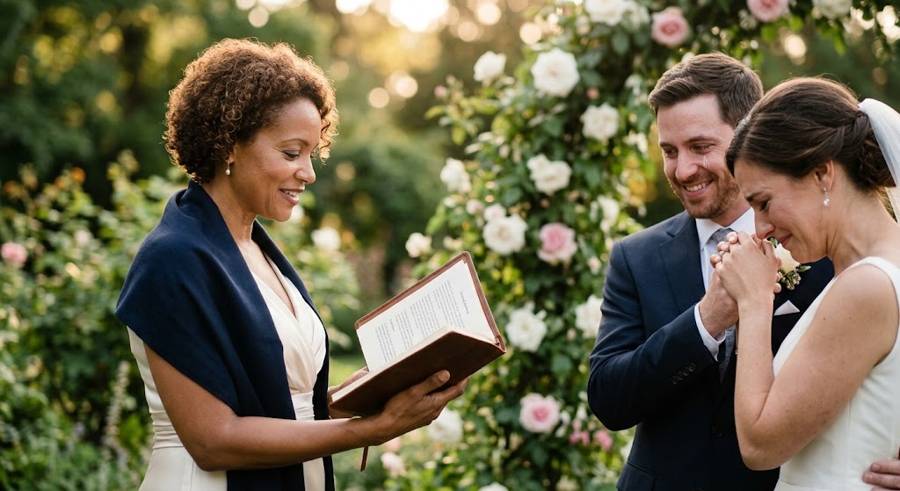
A wedding ceremony script is the complete outline and wording of your ceremony, from the moment your guests are seated to the final recessional. It includes the order of events, the spoken words for each section, the transitions between key moments, and the roles of participants such as the officiant, readers and musicians. Think of it as a blueprint that guides the flow, and a story that expresses your relationship, values, and commitment.
Where would you like to begin?
A ceremony has a lot of parts. You don't have to read them all. Pick the way that suits you.
Five complete sample scripts you can read start to finish in about five minutes: traditional, modern, spiritual, civil or personal.
Read the sample scriptsFollow the ceremony step by step, one phase at a time, and choose the wording that fits you for each moment.
Start the step-by-stepJump straight to the part you need, whether that's your vows, the rings, a reading or the welcome.
Jump to a pieceJump straight to
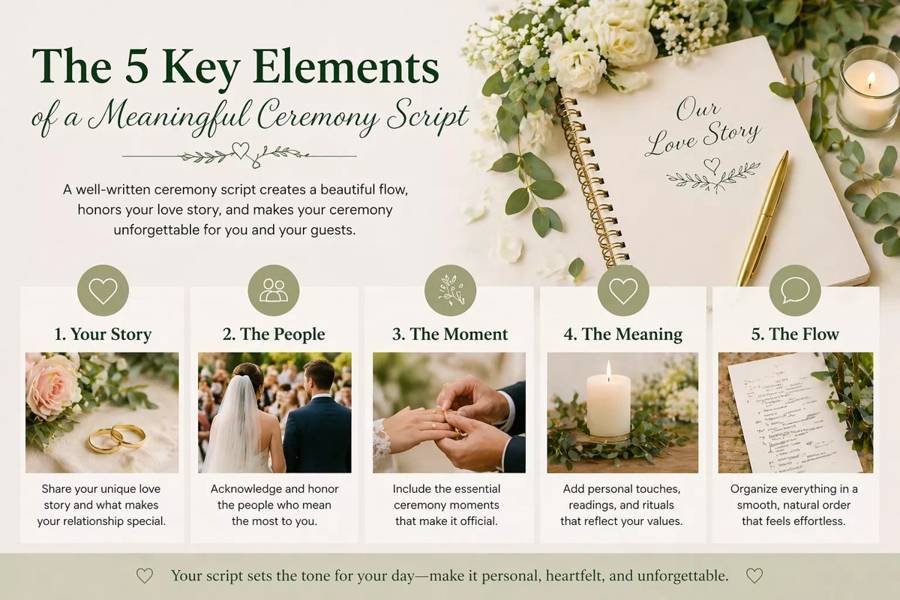
There is no single way to structure a ceremony script. Many couples blend elements from several styles to create one that feels truly their own.
A formal structure used for generations.
Best for: couples who value tradition, heritage, and continuity
Flexibility while still maintaining meaningful structure.
Best for: couples who want something meaningful but less formal
Rooted in faith and spiritual expression.
Best for: couples who want to express their faith or spiritual values
Focuses on the legal aspects of marriage with a simple structure.
Best for: couples seeking simplicity or a non-religious ceremony
Centers entirely on your relationship and shared journey.
Best for: couples who want a deeply personal and memorable experience
Step by step
Every ceremony follows a natural sequence. Use this as your foundation, then adapt, simplify or personalize it. Each step links to examples and wording ideas.
Arrival, welcome and the first words
The entrance of the wedding party and the couple. It sets the tone, is often accompanied by music, and can be traditional or fully customized.
Read moreTraditionally "Who gives this person…" Modern options: both families acknowledged, self-presentation, or no formal presentation.
Read moreYour officiant greets guests and sets the intention: gratitude for gathering, the significance of the moment, and the tone.
Read moreA group blessing, a shared reading, or symbolic participation deepens connection and meaning.
Read moreReadings, reflection and the message
Selections that reflect your values: poetry, literature, spiritual texts, or personal writings. They add emotional depth and perspective.
Read moreA short reflection on love, marriage, or commitment. This is often where the ceremony becomes thoughtful, meaningful and memorable.
Read moreA short reflection on love, marriage, or commitment, and one of the best opportunities to make your ceremony deeply personal.
Read moreIntent, vows, blessing and rings
The formal declaration: "Do you take…?" It confirms your willingness to enter marriage.
Read moreA transition into your vows that frames the moment and helps you prepare emotionally.
Read moreThe most personal part of the ceremony. Traditional, written together, or written individually.
Read moreA moment of affirmation, hope for the future, and shared meaning. Blessings convey intimacy and sacredness, and speak to both the present and the future.
Read more"The tokens that you give to each other were chosen with love and care. As you wear these rings, know that they are the reflections of your partner's heart."
Read moreA symbolic act representing unity, commitment and continuity. Rings serve as a daily reminder of your promises.
Read morePronouncement, closing and exit
The moment your marriage is officially declared, both symbolic and legal. They are married!
Read moreFinal words of encouragement or blessing that set the tone for what comes next.
Read moreYour exit as a married couple: celebratory, joyful, and the transition into the reception.
Read more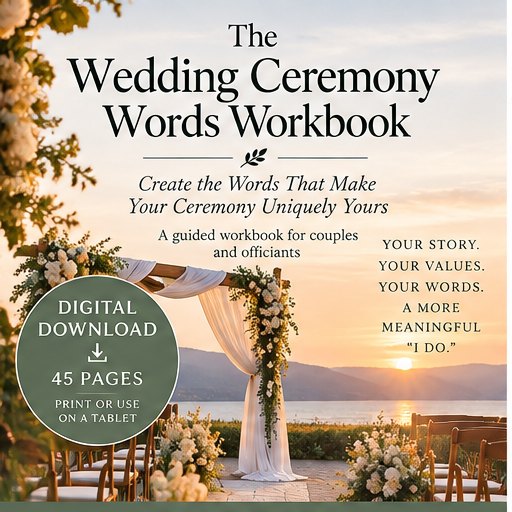
Need help finding the words?
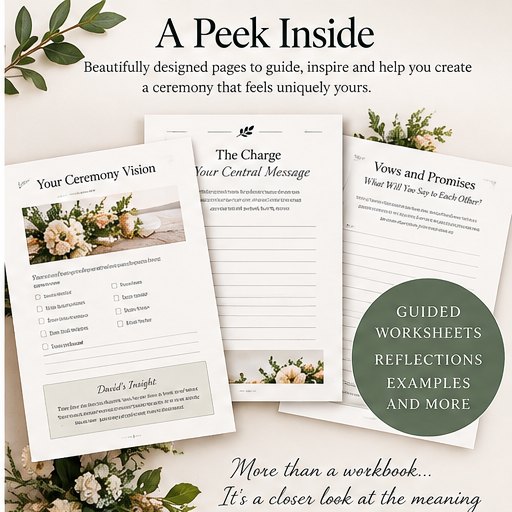
A 45-page guide that turns your story, values, vows and ideas into meaningful ceremony language. Through guided questions, reflection exercises, examples and writing prompts, you'll explore your ceremony voice, the charge or message about marriage, your vows, ring exchange, transitions and closing words, then bring everything together in a Ceremony Profile you can share with your officiant.
Get the Workbook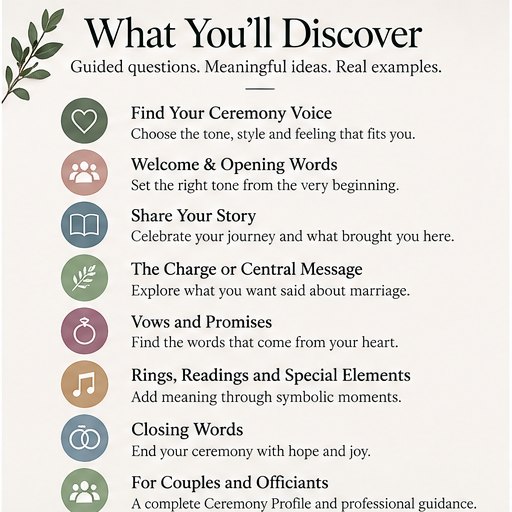
Your ceremony is not just a sequence of events. It is a personal expression of your story. Work closely with your officiant, and keep a journal of ideas, phrases and readings that resonate with you.
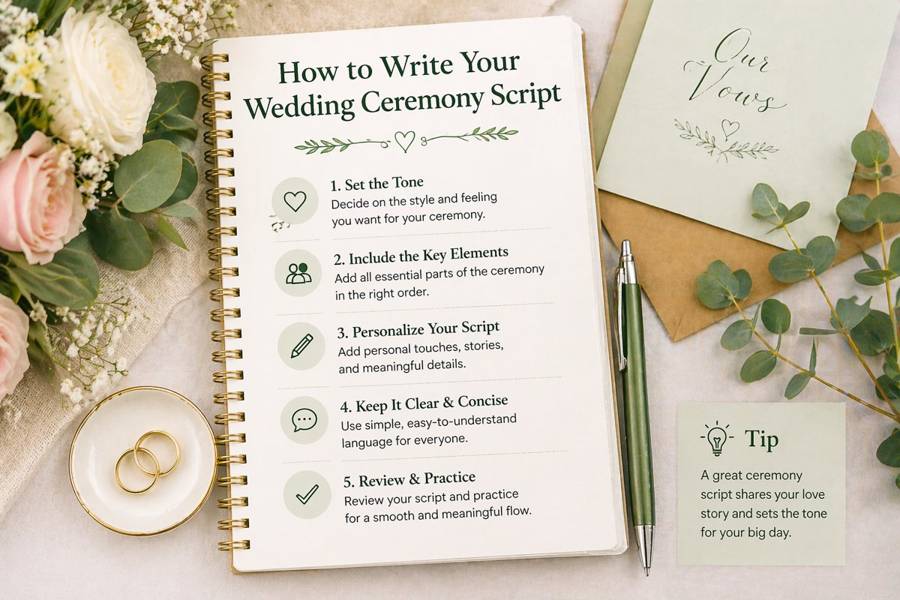
Ask yourselves: do we want formal or relaxed? Spiritual or secular? Traditional or modern?
Use the ceremony order above as your foundation.
Choose words that resonate with you. Consider what reflects your relationship, what feels authentic, and what you want remembered.
You don't need to write everything from scratch. Adapt existing wording, personalize key moments, and focus on authenticity.
This is critical. Discuss wording preferences, legal requirements, and timing and flow. Many officiants have preferred wording or structure for certain parts of the ceremony.
Read your script aloud. Adjust tone and pacing. Make sure it feels natural.
You don't need to follow every element exactly. Keep the traditions that matter, change wording to fit your personality, remove what doesn't resonate, and add personal touches. Ask yourselves:
Avoid long pauses that interrupt the moment. Make transitions clear and natural, and keep a comfortable rhythm from beginning to end.
Connect with your readers, musicians and officiant. Clear communication helps everyone understand their role and timing.
Even a simple walkthrough refines timing, confirms positioning, and builds confidence.
Something may not go exactly as planned, and that's okay. The goal is a ceremony that feels genuine, meaningful, and true to you.
Typically 20–30 minutes, but it depends on the number of readings, cultural elements, and personal preferences.
No. You can use traditional vows, shared vows, or fully custom vows.
Yes. The structure is flexible as long as the legal elements are included and the flow still makes sense.
Start simple. Use templates, adapt existing wording, and build gradually.
At least 2–4 weeks before the wedding. This allows for rehearsal, officiant review, and final adjustments.
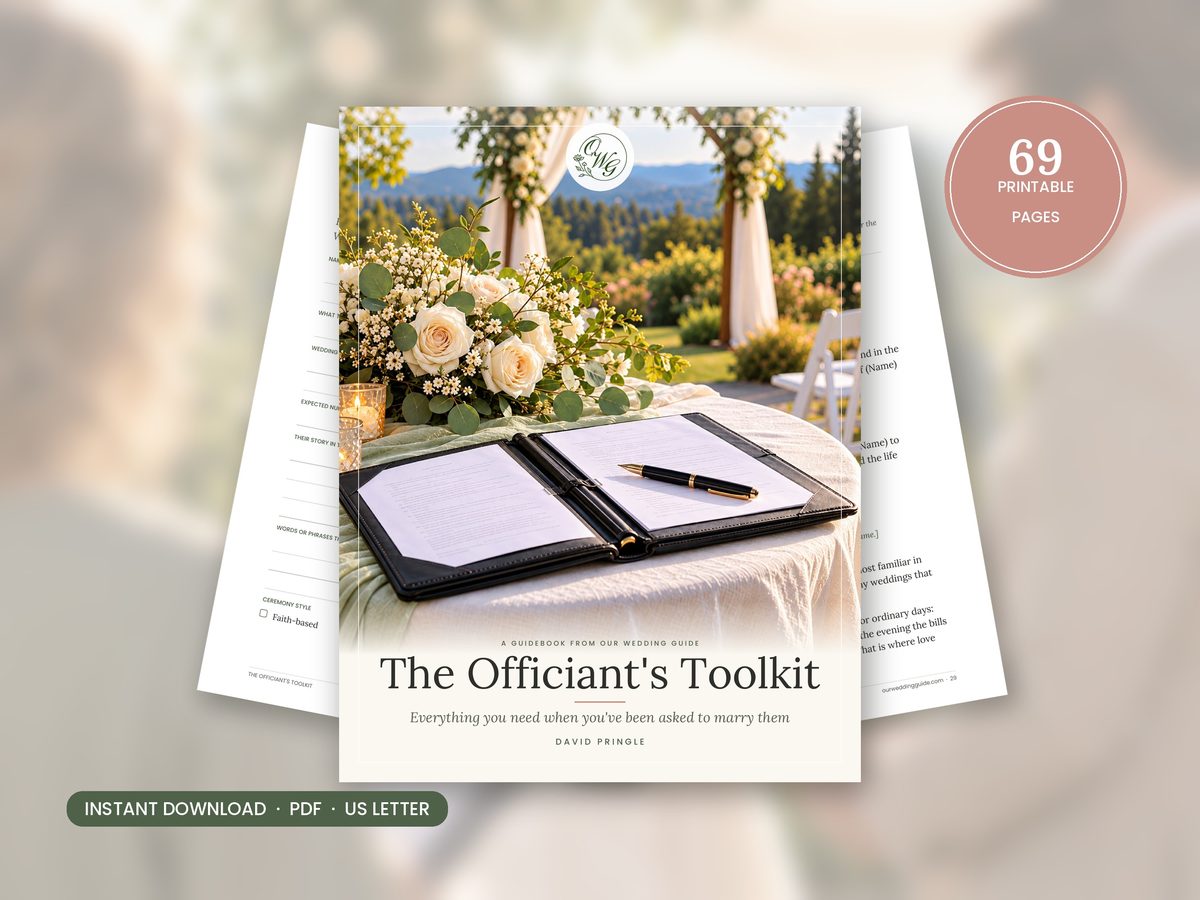
Asked a friend to officiate? A 69-page printable guide that takes them from "yes" to mailing the license.
See what's insideHeart stones, a Fountain of Friendship, a love letter just before the ceremony, and ways to position your wedding party.
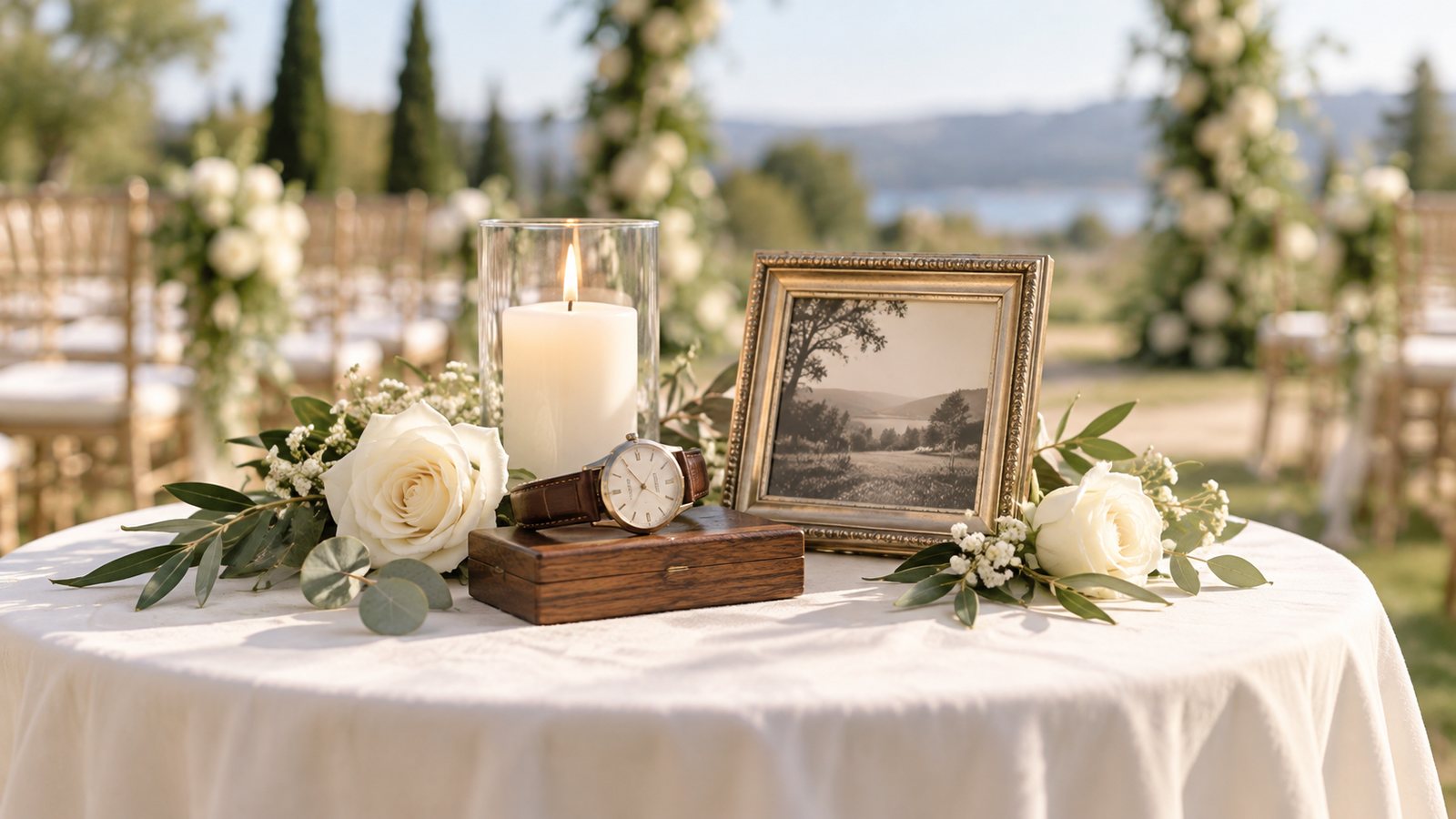
Read the guideMarrying again after loss? A simple keepsake table, with words for the officiant and both of you.
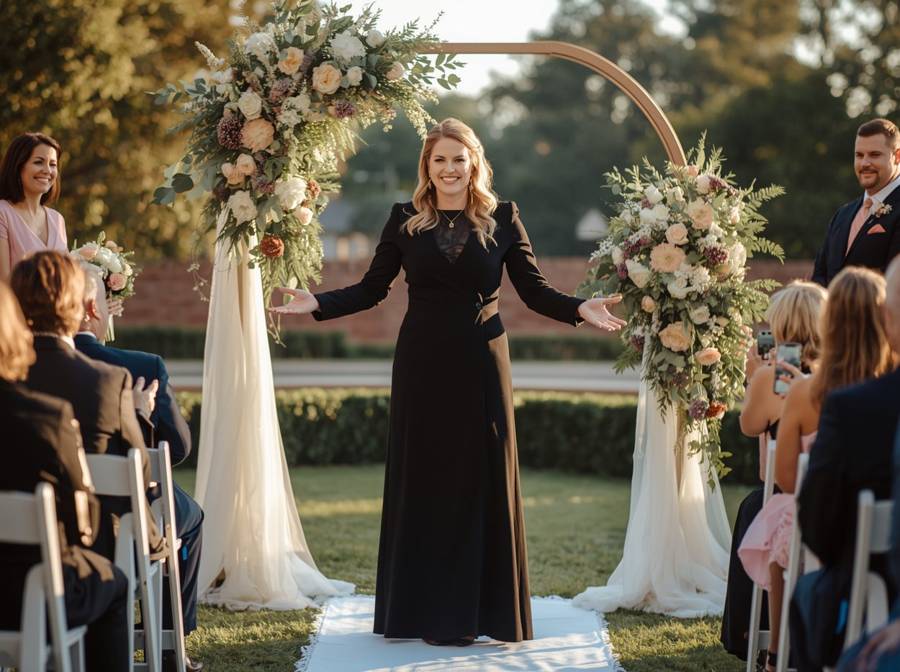
Read the guideWhere to look, what to ask before you book, and what the fee should cover.
Read the guideA private moment of connection before the ceremony.
Read the guideWhen your ceremony reflects your story, it becomes more than a part of your wedding day. It becomes a memory you will carry with you for the rest of your lives. Take what resonates, adapt what matters, and create a ceremony that truly reflects your story.
Take it one step at a time with our step-by-step guide.
Go to Start HereSome links are affiliate links. I may earn a small commission at no extra cost to you.