
Presenting, not giving away
Presenting the Bride, Groom or Couple
Years ago, I began using the word presenting rather than giving away when a parent or another important person accompanied someone into the wedding ceremony.
I preferred it because women are certainly not property to be given or acquired, and the moment is not about one person transferring another to someone else. It was about someone important in the couple’s life having the privilege of accompanying them into one of life’s significant moments.
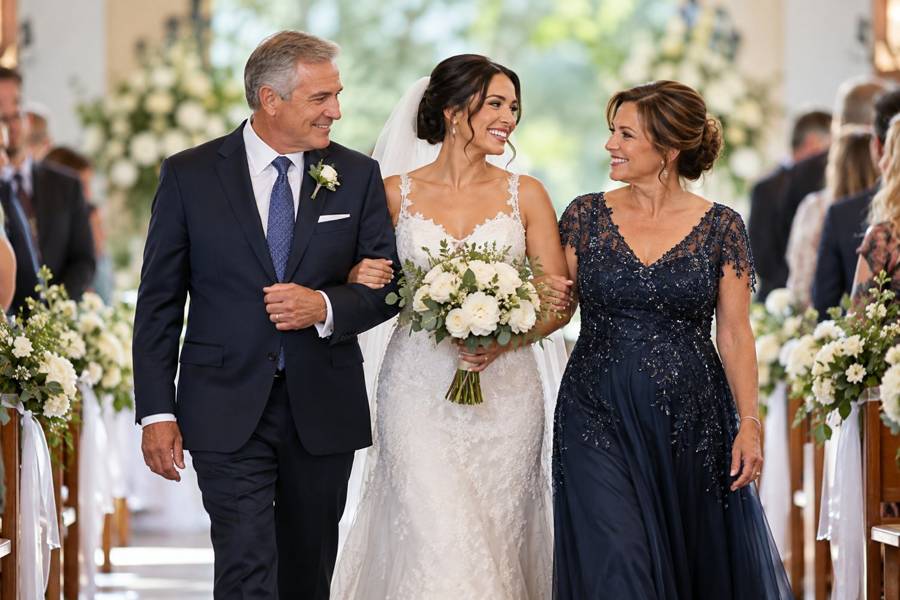
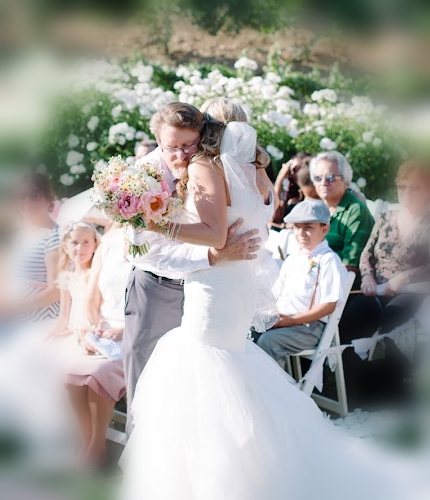
Over the years, I have seen how meaningful this can be. There can be enormous pride in the face of a father or mother as they walk their son or daughter down the aisle. A grandparent, sibling, child, close friend, or another important person may fill that role. Sometimes both parents take part. Sometimes a person enters alone. And sometimes the couple enters together.
There is no single correct way to do this. What matters is choosing an entrance and wording that reflect your relationships, your family circumstances, and what the moment means to you.
This moment is one part of the complete wedding ceremony script and usually takes place right after the processional.
The quick version
- I use the word presenting rather than giving away when someone accompanies you into the ceremony.
- A parent, grandparent, sibling, child or close friend can accompany you, or you can walk alone or together.
- There is no single correct way, so choose what reflects your relationships and what the moment means to you.
- Mom can keep her place as the last guest seated, then rise and join dad and the bride.
- Check the aisle width at your rehearsal, and reserve an aisle seat for whoever accompanies you.
Women are certainly not property to be given or acquired, and the moment is not about one person transferring another to someone else.
In this guide
Who can accompany you down the aisle?
Traditionally, a father escorted the bride down the aisle. Many couples still choose that tradition because it has personal meaning for them. Others adapt it or choose something entirely different.
You might be accompanied by your father, mother, both parents, a grandparent, sibling, child, another relative, or a close friend. You may prefer to walk alone, or the two of you may choose to enter from opposite sides and meet before continuing together.
Family circumstances can also shape the decision. Divorce, remarriage, the death of a parent, strained relationships, or simply the people who have played the most important roles in your life may all affect what feels right.
The question is not “What are we supposed to do?” A better question is “Who, if anyone, would make this moment especially meaningful to us?”
The question is not “What are we supposed to do?” A better question is “Who, if anyone, would make this moment especially meaningful to us?”
Practical things to consider
Typically, dad escorts the bride, and it is probably more powerful for him than for his daughter. It is certainly a moment of privilege and pride. But mom had a significant role in raising her as well. Mom traditionally has a place of honor as the last guest seated, which signals that the wedding party is about to follow. If mom walks with dad and the bride, she gives up that place. To have both, she can rise from her chair and join them once they reach her.
Some ceremony aisles are narrow, which can make it awkward for three people to walk comfortably side by side. If both parents or two other people will accompany you, think about the width of the aisle at your rehearsal.
Also think about where the person accompanying you will go after the entrance. If a parent or another special person will sit near the front, reserving an aisle seat makes it much easier for them to reach their place without moving past other guests.
These may seem like small details, but planning them ahead helps the entrance feel natural and unhurried.
These may seem like small details, but planning them ahead helps the entrance feel natural and unhurried.
Wording for presenting the bride, groom or couple
There is no single right way to handle this moment. Some couples want to keep the traditional presentation of the bride, while others prefer wording that emphasizes blessing, support, or the joining of two families. The following examples can be used as written or adapted to fit the people and relationships involved.
1. A traditional presentation
Tap to read
For couples who want to preserve the familiar tradition of someone presenting one partner in marriage, the wording can be simple and direct.
Officiant: Who presents (Name) to be married to (Name)?
Parent or Accompanying Person: I do.
Or, both parents: We do.
For a traditional bride-and-groom ceremony, the familiar wording may also be used: “Who presents this woman to be married to this man?”
2. Presented by both parents
Tap to read
This version gives both parents an equal part in the moment and emphasizes their love and support.
Officiant: Who has loved and nurtured (Name) through the years and now presents (Name) with love and joy as they enter marriage?
Parents: We do.
Officiant: And do you offer your love and support to (Name) and (Name) as they begin their married life together?
Parents: We do.
3. A parent’s blessing
Tap to read
Rather than asking who “gives” or “presents” someone, this wording focuses on a parent’s blessing.
Officiant: Who accompanies (Name) today and offers a blessing upon the marriage that (Name) and (Name) are about to enter?
Parent: I do, with my love and blessing.
Officiant: And will you continue to love and support them as they build their life together?
Parent: I will.
4. Presented with love and support
Tap to read
This version works well when a parent, grandparent, sibling, child, close friend or another important person accompanies someone down the aisle.
Officiant: Who has the privilege of accompanying (Name) into this marriage today?
Accompanying Person: I do.
Officiant: And do you offer your love and support to (Name) and (Name) as they begin this new chapter of their lives?
Accompanying Person: I do.
5. Honoring the family and home you come from
Tap to read
Marriage creates a new family relationship, but it does not erase the families, homes and relationships that helped shape each person. This wording recognizes those roots.
Officiant: (Name), from whose home and family do you come as you enter this marriage?
Name: I come from the home and family of __________.
Officiant: And who offers their blessing and support as (Name) and (Name) create a home and life of their own?
Parent or Family Member: We do, with our love and blessing.
6. A grandparent, sibling, child or other special person
Tap to read
The person accompanying you does not need to be a parent. The words can recognize whoever has played an important role in your life.
Officiant: (Name), who has walked beside you, loved you and helped shape the person you have become?
Name: My __________ has.
Officiant: And do you offer your blessing and support as (Name) and (Name) enter this marriage?
Accompanying Person: I do.
7. Presenting both partners
Tap to read
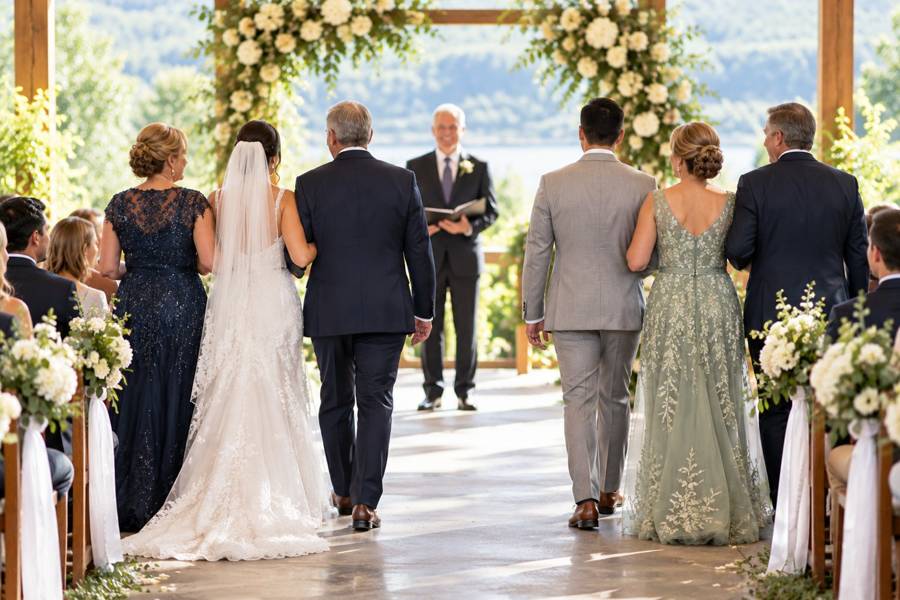
If both partners are accompanied into the ceremony, the presentation can recognize both families or the important people in each partner’s life.
Officiant: Who presents (Name) today with love and support?
Family or Accompanying Person: We do.
Officiant: And who presents (Name) today with love and support?
Family or Accompanying Person: We do.
Officiant: And do you join together in offering your blessing and support to (Name) and (Name) as they enter marriage?
Families or Accompanying Persons: We do.
8. When the couple enters together
Tap to read
A couple may choose to enter the ceremony together, symbolizing that they are taking this step side by side. Family and friends can still be acknowledged.
Officiant: (Name) and (Name) come before us today together, freely choosing to enter marriage and to share their lives with one another.
To their families and all who have loved and supported them: Do you offer your blessing, encouragement and support as they begin their married life together?
Family and Guests: We do.
9. A short and simple presentation
Tap to read
Sometimes the moment does not need many words. This works especially well in a shorter or less formal ceremony.
Officiant: Who accompanies (Name) today with love and support?
Accompanying Person: I do.
Officiant: Thank you. And with that love and support, we welcome (Name) and (Name) as they come together in marriage.
10. Let the parents, family or special person speak
Tap to read
One of the most personal approaches is not to give the person accompanying you a prescribed response at all. Instead, invite them to offer a few words of their own.
Officiant: You have loved, encouraged and walked beside (Name) through many important moments in life. Today is another of those moments.
What words of love, blessing or encouragement would you like to share with (Name) and (Name) as they enter marriage?
Parent, Family Member or Special Person: (Offers a brief personal blessing or words of encouragement.)
Officiant: Thank you. May those words and the love behind them accompany you both throughout your marriage.
Choose what feels meaningful to you
Whether you choose a traditional presentation, a parent’s blessing, the support of family and friends, or simply enter the ceremony together, the words should reflect the relationships that matter to you.
This is a brief moment in the wedding ceremony, but it can carry a great deal of meaning. Choose words that feel natural, honor the people who have been part of your lives, and fit comfortably with the ceremony you are creating together.
Once the couple has been presented and is together before the officiant, the ceremony moves forward. Next comes The Intentions, when each person publicly expresses the intention to enter the marriage.