
More than two of you
Blended Family Wedding Ceremony: Including the Children
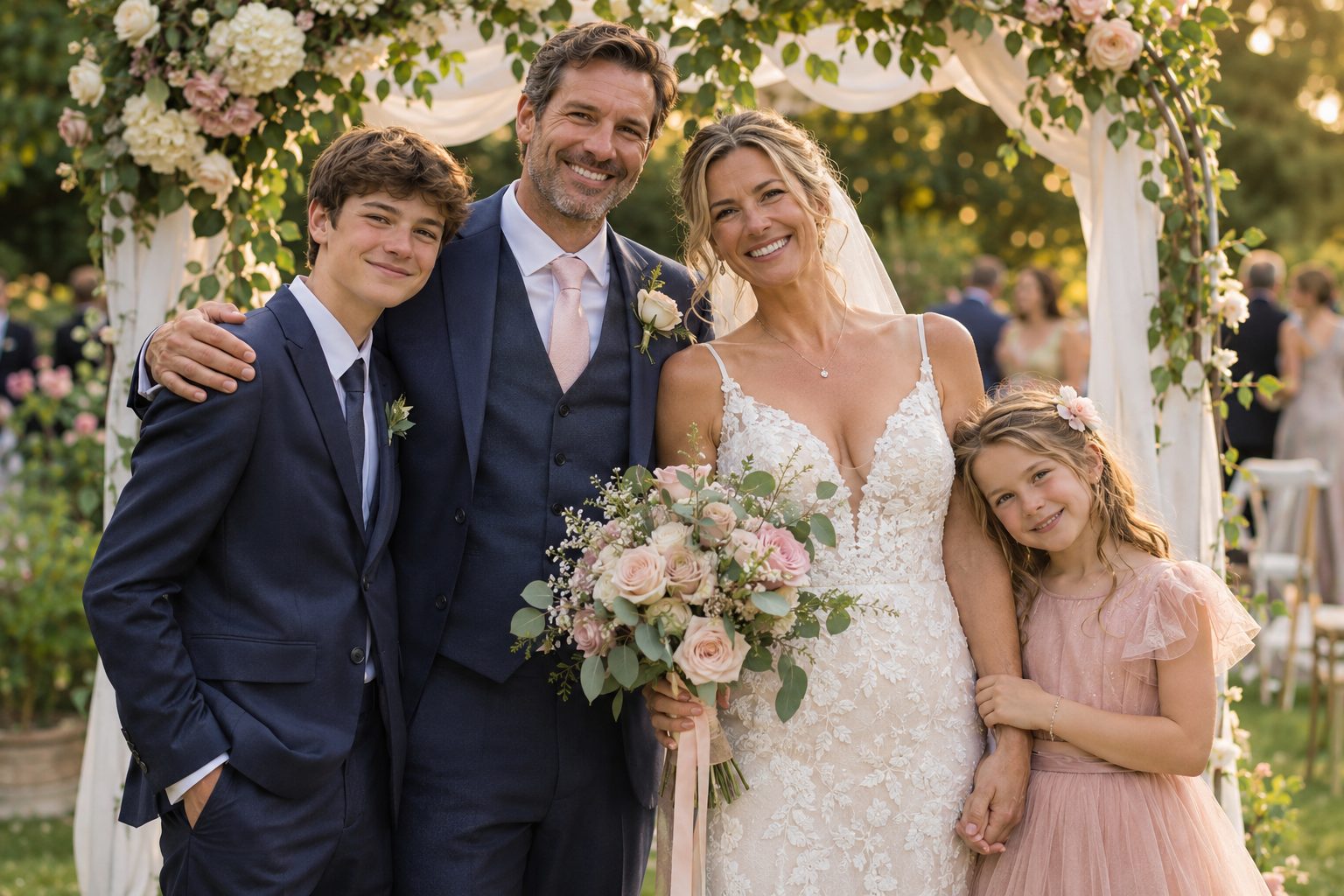
When one or both of you bring children into a marriage, the wedding isn't only about the two of you. A new family is starting that day, and the children are part of it whether they're four or forty. The ceremony is a good place to say so out loud.
Done well, it can be one of the moments people remember most. Done carelessly, it can put a child on the spot in front of a crowd. Here's how to get it right.
The quick version
- Ask the children first. Including them should be an invitation, never an assignment.
- The simplest ways: have them walk with you, stand with you, or take part in a unity ritual like sand or a candle.
- The most meaningful way: promises from the new stepparent to each child, sometimes with a small gift like a necklace or ring.
- Match the part to the child's age. A five-year-old and a sixteen-year-old need very different jobs.
- Keep it short and rehearse it. A minute or two is plenty.
In this guide
Ask before you plan
This is the part people skip, and it's the part that matters most. Before you write a word, sit down with each child and ask how they feel about the wedding and whether they'd like a part in it.
Some children will light right up. Some will want a small job and nothing more. Some, especially teenagers, may not be ready to say anything in front of people about a family that is still new to them. All of those answers are fine.
A child who is pushed into promises they don't feel yet will remember the pushing, not the wedding.
If a child says no, give them an easy way to still be close: a seat in the front row, a flower to hold, a moment for a hug after the vows. Being there and being honored is enough.
It's also kind, where it's possible, to let the children's other parent know what you're planning. Nobody wants them to hear about it secondhand and feel shut out.
Ways to include the children
Pick one or two. You don't need all of them.
Walking in
A child can walk a parent down the aisle, or the whole family can come in together. For a parent marrying again, being escorted by a son or daughter says a great deal without a single word.
Standing up with you
Older children can serve as maid of honor, best man or part of the wedding party. Younger ones can be flower girl, ring bearer or junior attendants.
Being named in the welcome
The officiant can name the children right at the start: "We're here to celebrate (Name) and (Name), and the family they are becoming with (children's names)." It's a small thing, and children notice it.
A family unity ritual
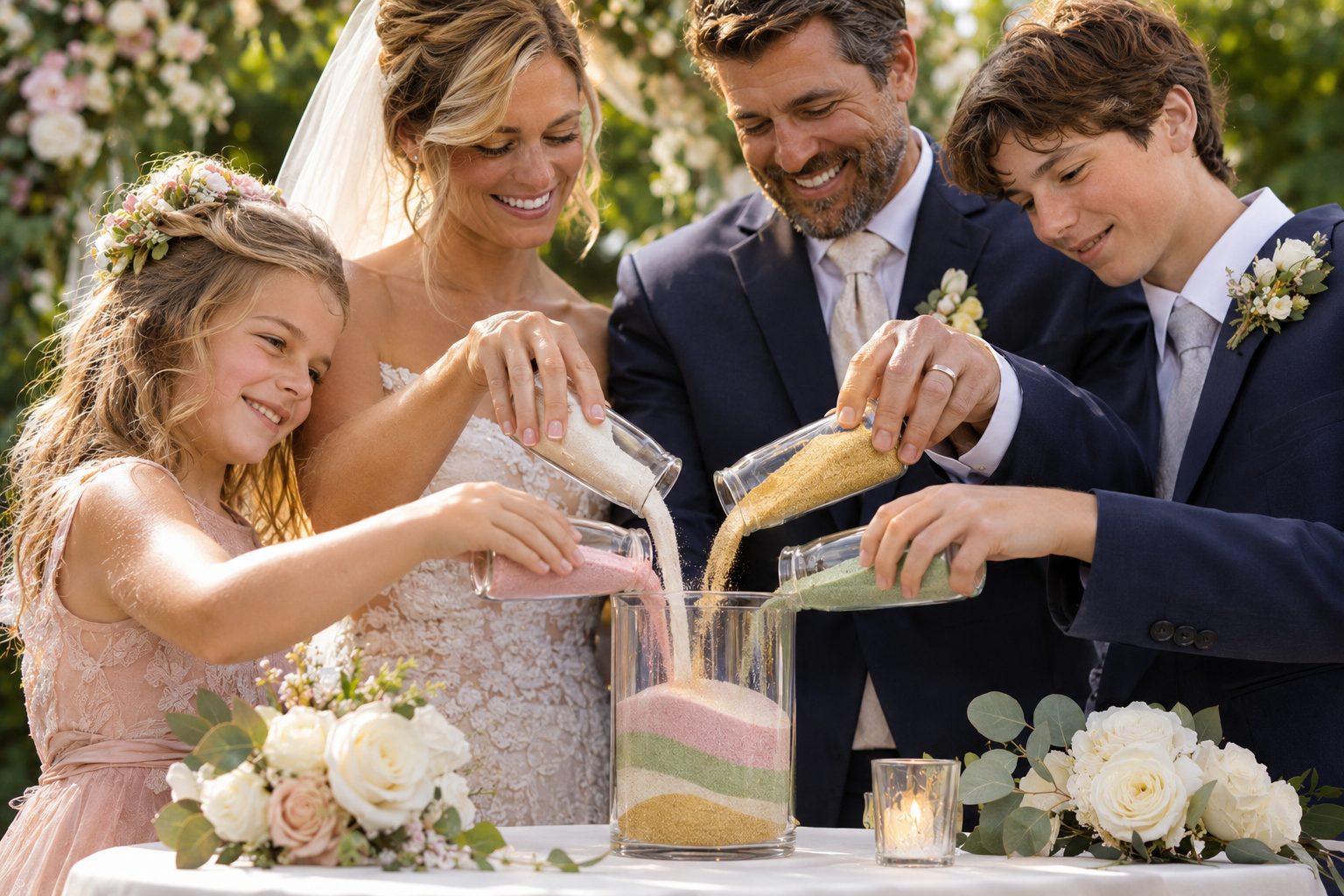
A sand ceremony works especially well. Each person pours a different color into one vase, and the colors mix so they can never be separated again. A unity candle can work the same way, with each child lighting a small candle. With little ones, sand is safer than flame.
Promises to the children
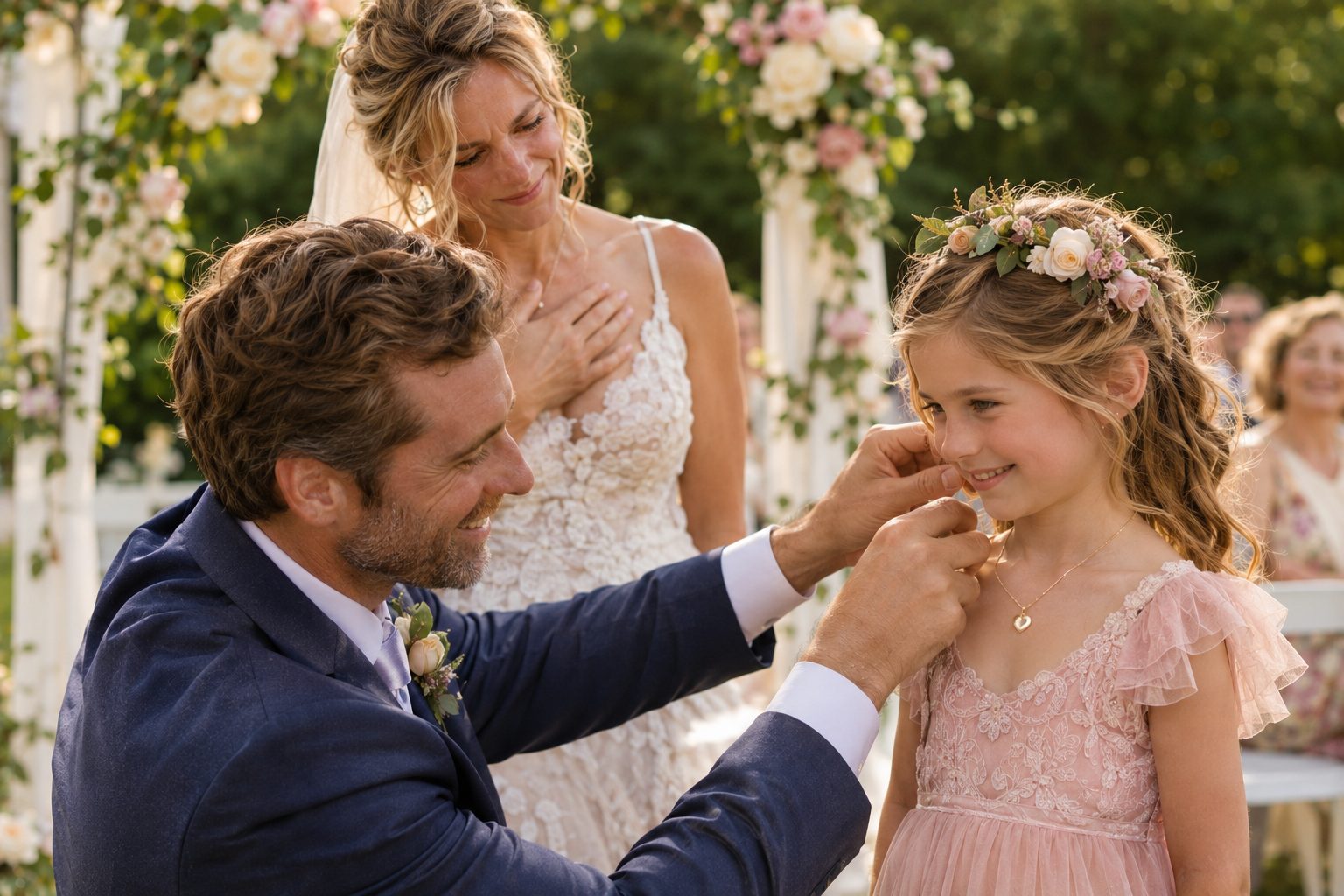
After the couple's vows, the new stepparent turns to each child and makes a few simple promises. This is often the moment that brings out the tissues.
A family gift
Along with the promises, the stepparent can give each child something to keep: a necklace, a small ring, a bracelet or a medallion. It gives the child something they can hold onto long after the day is over.
A reading or a blessing
An older child may like to read something, or say a few words of blessing over the couple. Let them choose it, or help them choose it.

From the author
More ways to bring family in
Woven Together gathers 24 ways to include your family and friends in the ceremony, from a remembrance table to a weaving circle and wishing hearts. Every idea comes with what you’ll need, how to set it up, and wording you can print.
See Woven Together on EtsyAffiliate link: we may earn a small commission at no extra cost to you.
How it can sound
Here is wording you can use as written or change to fit your family. Put in your own names where you see (Name) and (Child's name).
The officiant, introducing the moment
“(Name) and (Name) have made their promises to each other. But today a family is being joined, not just two people. (Child's name) and (Child's name) are part of this marriage too, and (Name) has some promises to make to them.”
Promises to a young child
“(Child's name), I'm marrying your mom today, and I want you to know something. I'm going to take care of you. I'll be there when you need me. I'll laugh at your jokes, and I'll listen when you're sad. I'll never try to take anyone's place in your heart. I just want to be someone you can count on.”
Promises to a teenager
“(Child's name), I know this is a big change, and I know you didn't get to choose it. I'm not asking you to feel any certain way about me today. I'm promising to respect you, to be fair with you, and to show up for you. I'll earn your trust over time, not ask for it all at once.”
Promises to grown children
“(Child's name), you've known your dad a lot longer than I have, and you've had him to yourself a long time. Thank you for welcoming me. I promise to love him well, and to honor the family you already are. I hope in time I'll be part of it, in whatever way feels right to you.”
The officiant, closing a sand ceremony
“Each of these colors stands for one of you. Once poured together, they can never be separated again. Your family won't always look like this vase, neat and settled. But like this sand, your lives are now mixed together, and from today you belong to each other.”
By age
- Under six: give them one simple job, like carrying flowers or rings or pouring sand. Keep them near a parent or a trusted adult. Expect the unexpected and enjoy it.
- Six to twelve: most enjoy a real role. They can stand with you, pour sand or light a candle, and receive promises and a gift. Short practice at the rehearsal helps them feel proud instead of nervous.
- Teenagers: ask, and take their answer seriously. Many prefer a role with some dignity, like walking a parent in or standing in the wedding party, over anything that puts their feelings on display.
- Grown children: they can walk a parent down the aisle, give a reading, offer a blessing or a toast. Promises to grown children should be respectful, not parental.
Practical notes
- Placement: promises and family rituals fit best right after the couple's vows and rings, before the pronouncement.
- Keep it short: two or three sentences per child is plenty. With several children, the officiant can speak to all of them together and the stepparent can add a line to each.
- Rehearse it: walk the children through where to stand and what happens. Don't make them memorize words. If they speak, they can repeat after the officiant.
- Fair is fair: if each of you has children, include all of them the same way so nobody feels like a guest at someone else's family.
- Have a plan for tears or stage fright: it's all right if a child freezes. The officiant can simply say, "That's okay. We know what's in your heart," and move on.
- Gifts: wrap them simply, give them to the officiant or best man to hold, and have them ready at the moment.
Questions couples ask
Should the children say vows back?
Only if they want to. Most ceremonies have the adults make the promises and the children simply receive them. That's usually the kinder way.
What if a child doesn't want to be part of it?
Let them off the hook gracefully. Name them in the welcome, seat them in the front row, and leave it there. Their feelings may change over the years, and you'll have plenty of family moments ahead.
What if the children's other parent objects?
Listen to the concern. Often it's a fear of being replaced. Wording that says "I'll never try to take anyone's place" goes a long way. If it remains a sore point, choose a gentler way to include the children, like walking in together.
Is this only for young children?
Not at all. Grown children of a parent marrying later in life often appreciate being included even more. The wording just changes.
If one of you has lost a spouse, see honoring a late spouse. You'll also find wedding vow examples, including blended-family vows, and the complete ceremony script guide.