
Plan with confidence
How to Plan a Wedding Budget Without Overspending
Your wedding budget is the first big decision, and it shapes all the others. Before you fall in love with a venue or start a guest list, sit down together and decide what you can spend. Without that, the choices pile up fast, and the bills come with them.
Costs creep. The guest list grows, the decor gets fancier, and every vendor has an upgrade that sounds reasonable. A budget gives you something to measure each choice against. It is also a good reason to talk with each other about what matters most.

The quick version
- Set your budget first, before you fall in love with a venue or build a guest list.
- Talk about what matters most to you both, and spend on those things.
- Commit only to what you can afford, because going into debt for a wedding is a bad idea.
- Your guest count drives the biggest costs, so settle on a rough number early.
- Set aside 5 to 10 percent for the surprises nobody plans for.
In this guide
- A budget is also a conversation
- Five tips to stay on budget
- How to plan a wedding budget: a step-by-step guide
- What I learned about money the hard way
- Wedding budget breakdown: typical wedding costs
- A real example wedding budget for 100 guests
- Wedding budget calculator example
- Hidden wedding costs couples forget
- How guest count affects your wedding budget
- How to reduce wedding costs without sacrificing what matters
- Wedding budget mistakes couples often make
- Best tools and templates for wedding budget planning
- Related wedding budget guides
- Frequently asked questions about wedding budgets
- Conclusion
A budget is also a conversation
Talking about money is one of the first real tests of a partnership. You are deciding together what is important, what is not, and where the limits are. Those are the same conversations that will carry you through a marriage, so a wedding budget is good practice. It is more than arithmetic.
Your budget should reflect your values, not what a magazine says or what is trending.
Five tips to stay on budget
- Decide how much you can spend without creating financial stress.
- Name your top priorities as a couple before you divide up the money.
- Estimate your guest count early, because so many costs are per person.
- Split the budget into the big categories: venue, catering, photography, attire, and decor.
- Set aside 5-10% for the costs nobody expects.
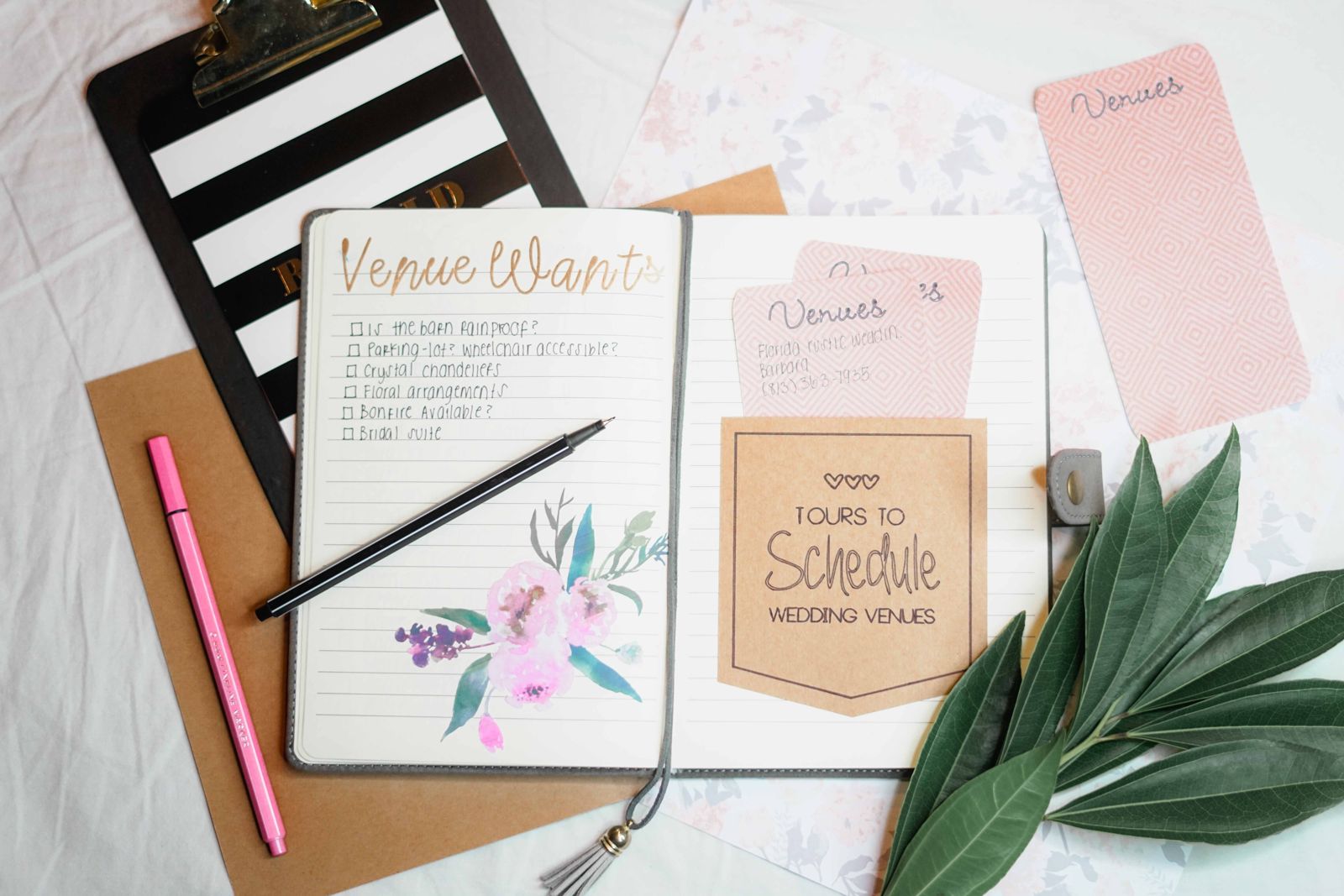
How to plan a wedding budget: a step-by-step guide
A budget works best when it starts with clarity rather than guesses. Before you make deposits or compare packages, take a step back and set up a framework. Then every...
Tap to read
A budget works best when it starts with clarity rather than guesses. Before you make deposits or compare packages, take a step back and set up a framework. Then every decision has something to be measured against, and you stay on the same page as a couple.
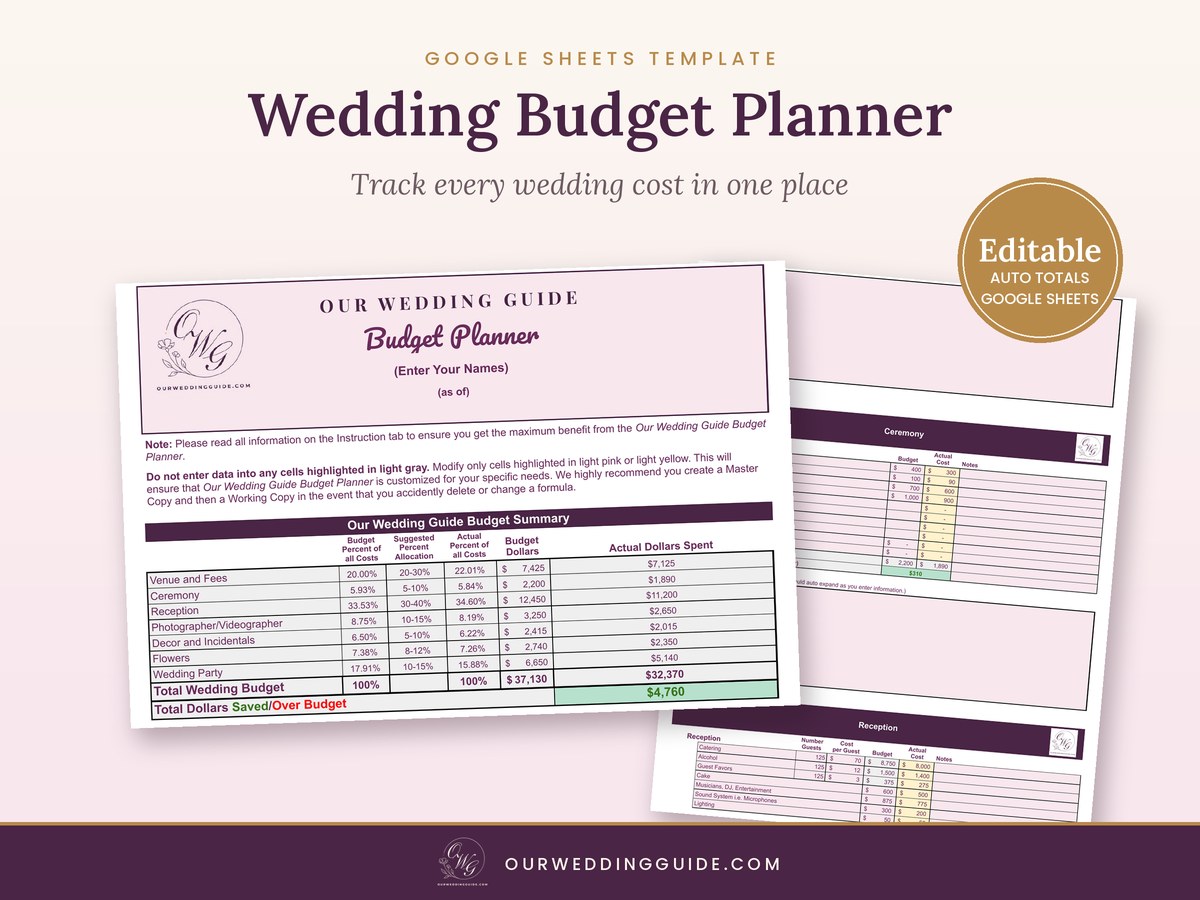
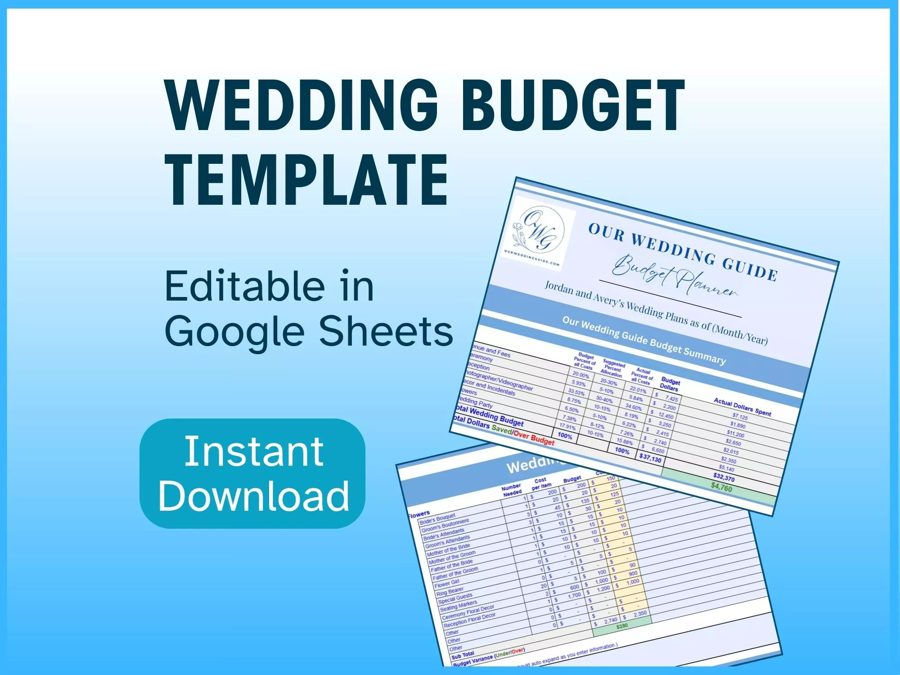
Instant download · Editable in Google Sheets
Wedding Budget Planner
Organize every wedding expense, track deposits and final payments, compare estimated and actual costs, and see what is left at a glance.
See it on EtsyAffiliate link: we may earn a small commission at no extra cost to you.
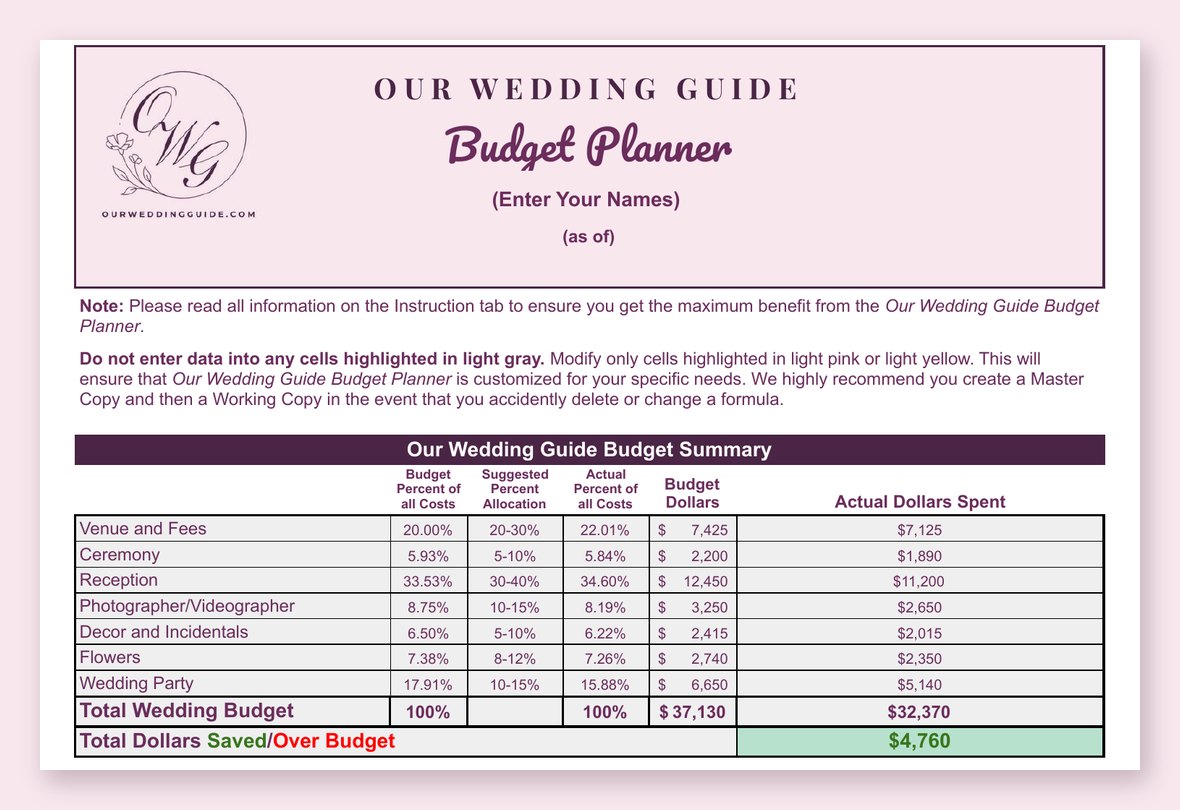
Step 1: Decide what matters most to you
Before you put numbers on anything, talk about what matters most to each of you. It might be the setting, the food, the photographs you will keep for years, or having everyone you love in one place.
Your budget should reflect your values, not what a magazine says or what is trending. When you know your priorities, you can spend on those and let the rest go.

Step 2: Set your total budget
Decide on the total you can really spend. Count your own savings, any gifts from family, and what feels responsible for your situation.
Be honest about this. Going into debt for the wedding is a bad idea, and so is maxing out your credit cards. Commit only to what you can reasonably afford, so you start married life without a weight on your shoulders.

Step 3: Clarify who is paying for what
If family is helping, talk about it early and be as clear as you can. Some families give a set amount. Others would like to cover one thing, such as the venue, the rehearsal dinner, or the flowers.
Settling this up front saves confusion and hurt feelings later. It also tells you which decisions are yours alone and which will involve other people.
Back in the day things may have been clearer, but perhaps more restrictive. Tradition can still hold, with the bride’s mom and dad funding the wedding, but more and more the engaged couple takes responsibility for a large part of the cost. Living on your own, your age, and whether you have lived together all change who pays, I think.
If most of the wedding is paid by someone else, offering to contribute is always a courtesy. Be specific to avoid misunderstanding. Say something like, “We have set aside $5,000 (or whatever amount you choose), and we would be pleased to contribute, as we know weddings are expensive.”
If you are paying for everything, you are in the driver’s seat and things are simpler. I caution that going into debt for the wedding is a bad idea. Do not max out your credit cards. The glamor of the wedding day will fade, but the meaning and love that are central will remain. Invest in things that last.

Step 4: Estimate your guest count
Your guest count drives the biggest costs: venue, catering, rentals, invitations, and the bar. Before you book anything major, make a rough list so you know how large a celebration you are planning.
Even a small change in the number touches several categories at once. Your guest list is one of the strongest levers you have over the whole budget.
Start with how to create a wedding guest list without stress or overspending and the guest list checklist.
Step 5: Divide your budget into categories
With a total and a guest count, divide the money among the big categories: venue and catering, photography, attire, flowers and decor, entertainment, stationery, transportation, and miscellaneous.
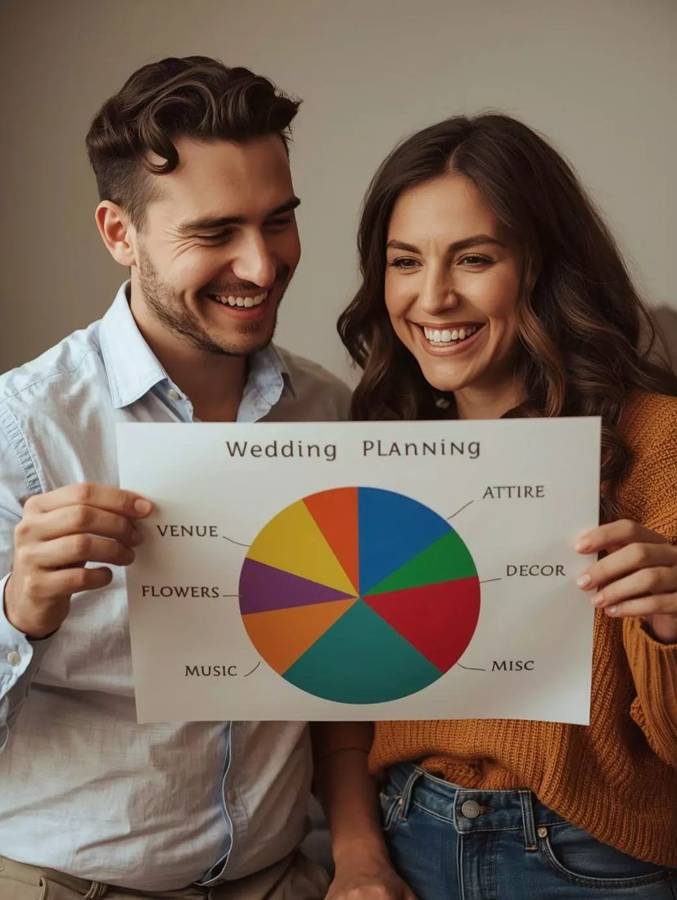
Think in percentages as well as dollars. The breakdown below is a starting point, not a rule. If photography matters deeply to you, give it a bigger share. If you want something simple, spend less on decor or stationery.
Step 6: Check real prices before you commit
Once you have your categories, find out what things actually cost where you live. Prices vary with location, season, guest count, and the vendor’s experience. Something that seems reasonable on paper may not be in practice.
As real quotes come in, adjust your numbers. Replacing guesses with facts is one of the most useful things you can do for your budget.
Step 7: Track every expense
A budget only works if you keep it current. Write down every deposit, purchase, and balance in one place. A spreadsheet, a binder, or an app will all work. (Further down I tell the story of my envelope system, which was my first tracking system.)
When you can see what you have committed and what is left, you will notice a category running over before it becomes a problem.
Step 8: Leave room for the unexpected
Most weddings have costs nobody planned for: alterations, vendor meals, tips, delivery fees, postage, overtime charges, and last-minute additions.
Set aside 5 to 10 percent of your total as a contingency fund. It takes a lot of stress out of the planning, and you will be glad it is there.
Step 9: Review it together, often
Do not make the budget once and forget it. Sit down together now and then and look at the numbers. A change in one category usually means a change somewhere else, and it is easier to decide that calmly than in the middle of a vendor call.
These check-ins keep you talking to each other, which matters at least as much as the numbers.
For more on working through choices together, see how to make wedding planning decisions together.
Step 10: Let the budget serve your priorities
A budget is not meant to take the joy out of your wedding. It is there to help you decide with clarity and confidence. When your spending matches your values, the budget helps you create the day you really want.
The goal is not perfection. It is a plan that is realistic and supports the life you are starting together.
The glamor of the wedding day will fade, but the meaning and love that are central will remain. Invest in things that last.
What I learned about money the hard way
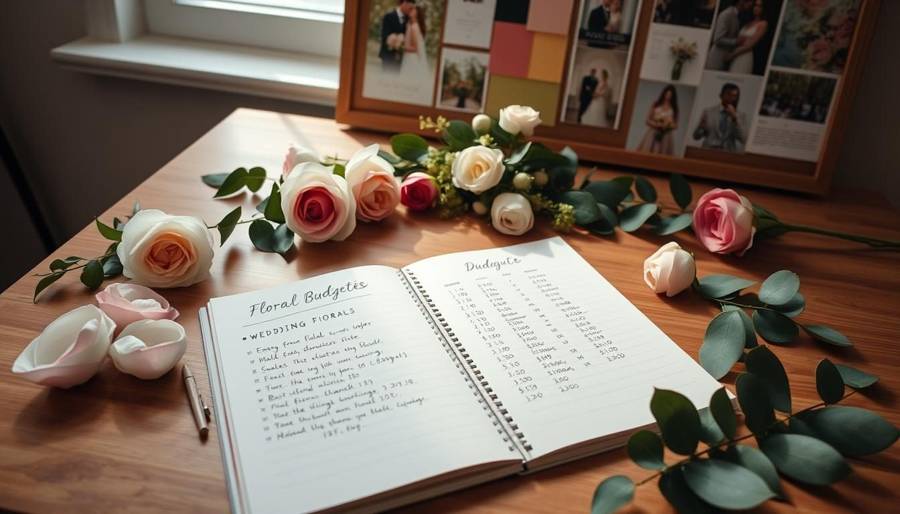
Budgeting and money were not my strengths. They were my wife’s.
Tap to read
Budgeting and money were not my strengths. They were my wife’s.
Before we were married, paychecks had to be cashed and the money put in the bank, and most bills were paid by check. I was always short when it came to the last few bills. So I came up with what I called the envelope system. I’m sure someone else coined the idea, but I came up with it on my own.
On payday, I put cash into labeled envelopes for what I thought I needed: rent, gas for the car, the telephone, the car payment, insurance, and so on. Whatever was left, which was not much, was mine. It worked for me.
What I should have done was make one more envelope and label it “investments.” Oh, how I wish I had done that at 18 years of age.
Over the years I have learned so much from my wife. Sometimes her wisdom aggravated me, and I thought her approach to money was restrictive and punitive. I learned over time that money buys freedom, and debt enslaves you.
The sewing machine
Before I met my wife, I went with a young woman who loved to sew. Neither of us had any money, but I wanted to give her a great Christmas gift, so I bought her a sewing machine. Of course, there was no money to spare in the envelopes, so I put it on my credit card.
Months went by, and eventually we broke up. I met Shannon, and after we got engaged we started to talk about money. I shared my credit card expenses, which were not much, except for that sewing machine. It cost about $125 in those days, as best I can recall. After 24 months of minimum payments, it would have taken about another 54 payments to pay it off. That sewing machine would have been very expensive!
My wife convinced me to pay off the card.
Throughout our marriage, my wife and I have used credit cards extensively. And to this day, after more than 50 years of marriage, there has not been one month when we paid interest on those cards. They are paid off completely every single month. We use the cards for cash back, discounts, and points, and the money earns interest for us until we make our monthly payment. That only works if you pay the full balance every month.
That is why I say to engaged couples what I wish someone had said to me: decide together what you can afford, write it down, and give every dollar a place to go. Your wedding budget is a good place to start.
I learned over time that money buys freedom, and debt enslaves you.
Wedding budget breakdown: typical wedding costs
Most weddings share the same core categories, and venue and catering usually take the biggest share. Both depend on your guest count, which is why the number of people...
Tap to read
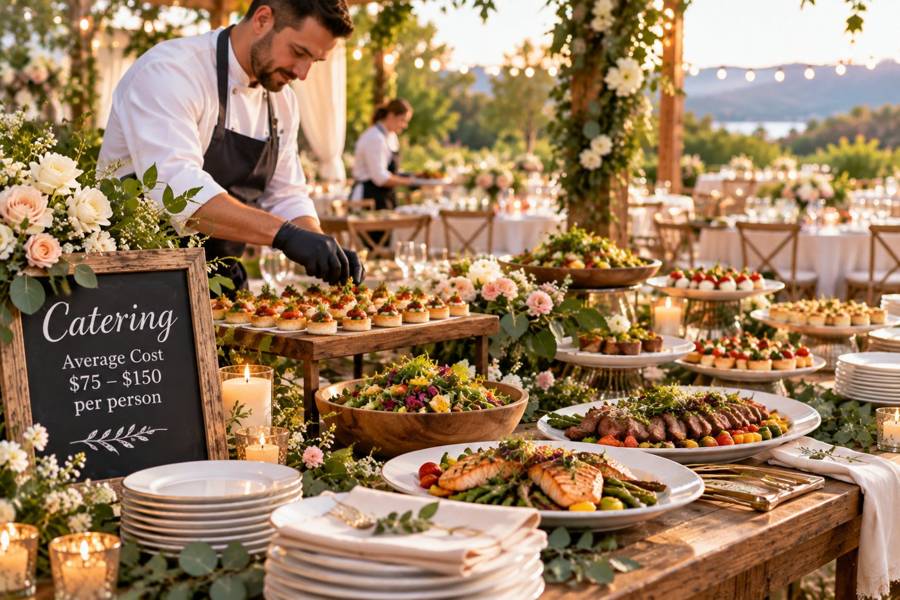
Most weddings share the same core categories, and venue and catering usually take the biggest share. Both depend on your guest count, which is why the number of people you invite matters so much.
A common breakdown looks like this:
- Venue and catering: 40-50%
- Photography and videography: 10-15%
- Attire and accessories: 5-10%
- Flowers and décor: 8-10%
- Music and entertainment: 5-8%
- Stationery and invitations: 2-4%
- Transportation and miscellaneous expenses: 5-10%
These percentages are guidelines, not rules. Some couples spend more on photography to hold on to the memories. Others put the money into the food, the music, or the setting. Use the numbers as a framework and make them yours.
A real example wedding budget for 100 guests
It helps to see how a budget works in practice. The numbers will vary with your location, venue, and choices, but here is one way a celebration for about 100 guests...
Tap to read
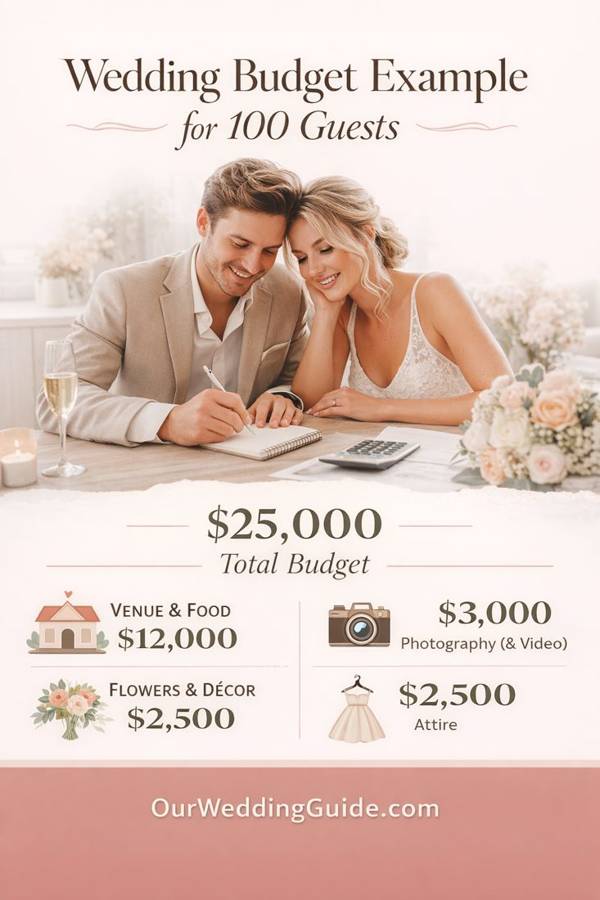
It helps to see how a budget works in practice. The numbers will vary with your location, venue, and choices, but here is one way a celebration for about 100 guests might be divided.
In this example, the couple has a total budget of $25,000. They want a beautiful day and want to start married life without financial stress.
| Venue and catering | $12,000 | |
| Photography | $3,000 | |
| Attire and accessories | $2,500 | |
| Flowers and décor | $2,200 | |
| Music and entertainment | $1,800 | |
| Invitations and stationery | $600 | |
| Cake and desserts | $800 | |
| Transportation | $500 | |
| Miscellaneous and contingency | $1,600 | |
| Total | $25,000 |
As usual, venue and catering take the biggest share, and both depend on guest count. Even a few guests more or less can change the total.
Your numbers will not look like this, and they should not. Some couples will put more into photography or music, others into the venue. What matters is that your budget shows what matters to you.
Want to see how costs add up in a different scenario? Read what does a wedding cost.
Wedding budget calculator example
A quick way to estimate your total is to start with a per-person figure. Say you expect to spend about $250 per guest and you are inviting 100 guests: 250 × 100 =...
Tap to read
A quick way to estimate your total is to start with a per-person figure. Say you expect to spend about $250 per guest and you are inviting 100 guests: 250 × 100 = $25,000.
That does not replace a detailed budget, but it gives you a realistic starting point. Try your own numbers below.
Once you have a total, you can divide it among venue, catering, photography, attire, flowers, and entertainment.
Hidden wedding costs couples forget
Everyone remembers the venue, the food, the photographer, and the dress. It is the small things that catch people off guard. Each is minor on its own, but together they...
Tap to read
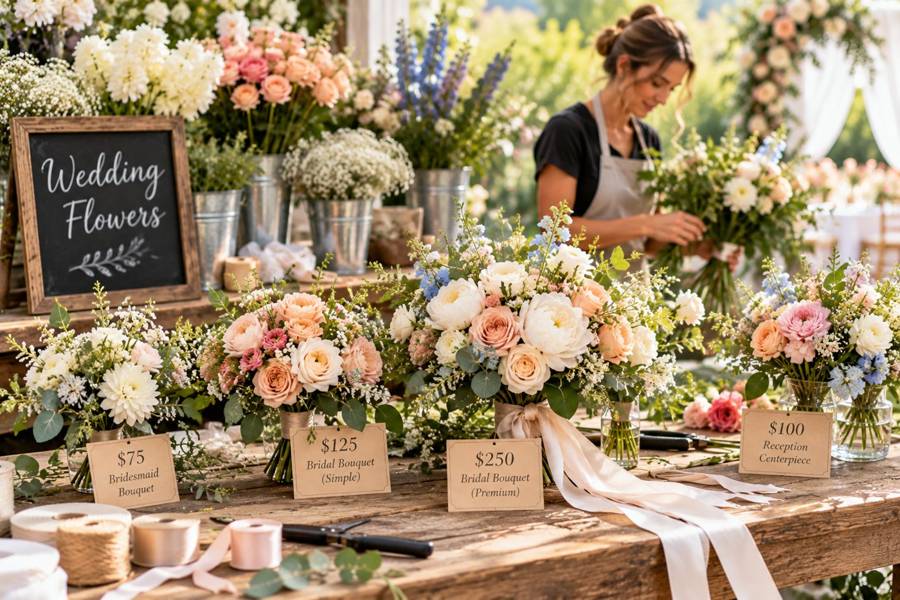
Everyone remembers the venue, the food, the photographer, and the dress. It is the small things that catch people off guard. Each is minor on its own, but together they can make a real difference to the total.
The small things
- Tipping for deliveries
- Snacks for the people working behind the scenes to set up your ceremony and reception
- Gift cards for someone who goes above and beyond to help
- Car washes for the vehicles used in your wedding
- Uber fees for picking up members of the wedding party or special guests
- Dry cleaning and alterations for that suit that has been hanging in the closet for a couple of years
- Those small, inexpensive items that just make things more special
It always amazes me that a trip to the dollar store can cost me over $50. Plan for the small stuff, and it will not surprise you later.
Service charges and gratuities
Many venues and caterers add a service charge of 18% to 25% of the total bill, and that is often separate from tips for staff, bartenders, or coordinators. When you review contracts, ask for a complete estimate that includes every fee and the tips you are expected to pay.
Alterations and attire accessories
Attire costs more than the sticker price of the dress or suit. Alterations, steaming, shoes, jewelry, veils, and cufflinks can add several hundred dollars.
Postage and invitation extras
The invitations are only part of stationery. Remember postage, RSVP cards, envelope liners, wax seals, and inserts with directions or hotel information.
Vendor meals
If your photographer, videographer, band, or coordinator will be there during the reception, many contracts require you to feed them. They are usually charged at the same per-person rate as your guests.
Transportation and parking
Transportation for the wedding party, a shuttle for guests, or parking fees at the venue can add up. So can fuel, rental time extensions, and extra drivers.
Marriage license and legal fees
These are small compared with everything else, but they belong in your budget.
Contingency
This is why the contingency fund in Step 8 matters. Last-minute decor, weather changes, or a timeline shift can all cost money you did not expect.
Plan for the small stuff, and it will not surprise you later.

How guest count affects your wedding budget
Your guest list is the biggest lever on your budget. Most wedding costs are per person, so a small change in the list ripples through the whole plan.
Tap to read
Your guest list is the biggest lever on your budget. Most wedding costs are per person, so a small change in the list ripples through the whole plan.
Add ten guests and you are not just adding ten meals. You may be adding table rentals, centerpieces, linens, place settings, invitations, and sometimes a bigger venue. A wedding with 150 guests can cost tens of thousands of dollars more than a similar one with 80.
Start with a rough guest list before you commit to major vendors. Once you know how many people you hope to invite, you can judge venues, catering, and total costs with a clear head.
How many people to invite is more than a matter of logistics. It decides the kind of day you will have, whether an intimate gathering of close family and friends or a larger celebration with a wider circle.
How to reduce wedding costs without sacrificing what matters
Spending less does not have to mean a lesser wedding. Mostly it means choosing carefully where the money goes.
Tap to read
Spending less does not have to mean a lesser wedding. Mostly it means choosing carefully where the money goes.
Start with your priorities. If photographs matter to you, protect that line and trim elsewhere. If it is the food, or the setting, do the same. Knowing what you care about makes it easier to cut what you do not.
Timing makes a difference too. Many venues give better rates for off-season dates, weekdays, or Sundays. Choosing a date outside peak season can lower venue and vendor costs without changing the day itself.
Simplify where you can: a smaller guest list, simpler decor, digital invitations, or a shorter reception. Those keep the spirit of the celebration and shrink the bill.
Keep in mind what the wedding is really about. When your plan is built on your values, you end up with a celebration that feels like yours and does not leave you with regrets.

Wedding budget mistakes couples often make
Even couples with the best intentions let a budget drift. There are many choices, a lot of excitement, and the numbers creep. Here are the common ones.
Tap to read
Even couples with the best intentions let a budget drift. There are many choices, a lot of excitement, and the numbers creep. Here are the common ones.
Underestimating guest count costs
Most major costs are per person, so a few extra guests touch catering, the bar, rentals, invitations, favors, and sometimes the size of the venue all at once. Set clear guidelines for your guest list early.
Ignoring hidden expenses
Service charges, tips, alterations, vendor meals, postage, and transportation can quietly become a real part of the total. Put them in the plan from the start.
Spending too much on low-priority details
There are so many beautiful ideas that it is easy to add decor, favors, or upgrades you never planned. Go back to your Step 1 conversation about what matters most, and scale back on whatever does not.
Not leaving room for the unexpected
Extra vendor hours, weather changes, or more decor can all cost you. Keep your contingency fund (5-10%) intact so you can respond calmly.
Best tools and templates for wedding budget planning
A good system makes budgeting much easier. Some couples like a spreadsheet, others a binder or a book. What matters is that all your numbers live in one place, so you...
Tap to read
A good system makes budgeting much easier. Some couples like a spreadsheet, others a binder or a book. What matters is that all your numbers live in one place, so you can see how each decision affects the whole plan. When you can see deposits, balances, and category totals at a glance, you are far less likely to lose track.
Wedding planning binders
A dedicated binder keeps vendor information, guest lists, contracts, timelines, and budget worksheets together. One popular option is The Knot Ultimate Wedding Planner and Organizer, which includes checklists, budgeting pages, and planning timelines.
Having everything in one spot makes it easier for the two of you to stay on the same page as the wedding gets closer.
Budget spreadsheets or templates
Many couples prefer to go digital. A spreadsheet can update totals for you and let you move money between categories as plans change. A simple one has columns for estimated costs, actual costs, deposits paid, and balances.
Both of you can open it and update it, which helps a lot.
Google Sheets template
Wedding Budget Planner
A ready-to-use system for tracking estimated and actual costs, deposits and balances.
See it on EtsyAffiliate link: we may earn a small commission at no extra cost to you.
Wedding planning books
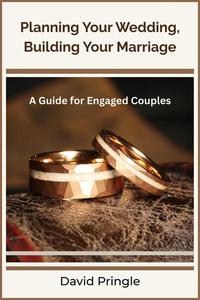
A good planning book gives you checklists and advice, and it also gets you talking about priorities, expectations, and what the celebration means. Planning Your Wedding, Building Your Marriage is written for that. It connects budgeting to your values and to the decisions you make together.
Book
Planning Your Wedding, Building Your Marriage
A planning book that connects budgeting to your values and shared decision-making.
Get the bookAffiliate link: we may earn a small commission at no extra cost to you.
The right tools will not make every decision for you, but they give you the structure to plan with confidence. With that in place, you can spend your energy on the day you are creating together.
Printable PDF kit
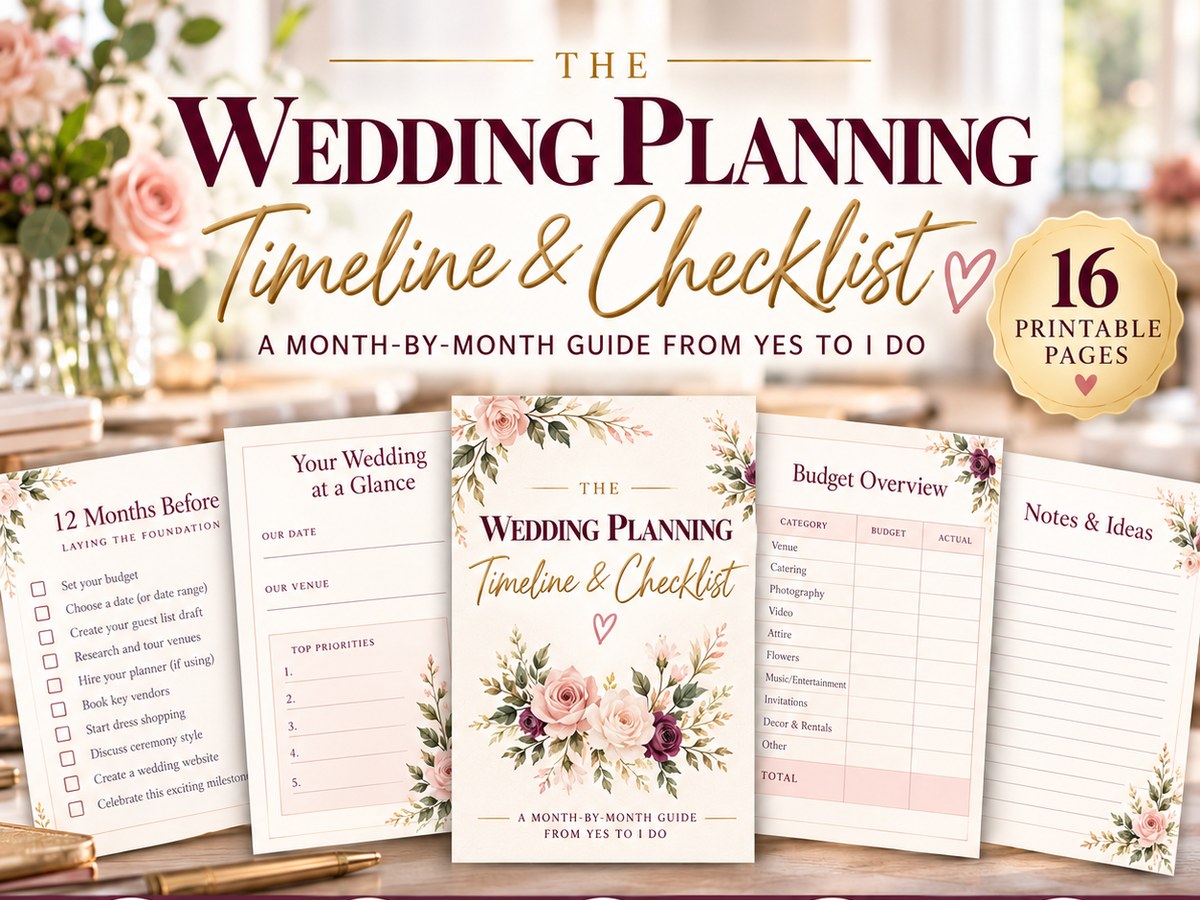
Wedding Planning Timeline & Checklist
A month-by-month checklist from the day you say yes to the day after the wedding, with a key dates tracker, a budget reminder and notes on every page. 16 printable pages.
See it on EtsyAffiliate link: we may earn a small commission at no extra cost to you.
Related wedding budget guides
- What does a wedding cost?
- Budget-friendly wedding planning
- Wedding decor on a budget
- A budget-friendly camping honeymoon
- Countdown to Your Spring Wedding: Prepare Today
- A Complete Set of Tools to Help You Plan Your Wedding
Frequently asked questions about wedding budgets
There is no one number. It depends on your finances, your priorities, and the kind of celebration you want. Some couples have a lovely wedding for under $10,000, and...
Tap to read
How much should a wedding budget be?
There is no one number. It depends on your finances, your priorities, and the kind of celebration you want. Some couples have a lovely wedding for under $10,000, and others spend far more. The goal is a day you can afford comfortably, without financial stress when it is over.
What is the biggest wedding expense?
Venue and catering, almost always. They are tied to guest count and usually take 40 to 50 percent of the total, which is why the number of guests matters so much.
How do couples split wedding costs?
Traditionally the families divided certain expenses, but today it is more flexible. Many couples pay for most of it themselves. Others get help from one or both families. Talk about it clearly at the start so everyone knows what they are comfortable giving.
How soon should we start the budget?
As soon as you are engaged, before you book a venue or vendors. An early budget guides the big decisions about guest count, venue, and style. If you wait, it is much easier for costs to grow past what you intended.
How much should I set aside for unexpected costs?
Plan on 5 to 10 percent of your total. It covers things like alterations, tips, delivery fees, overtime charges, and last-minute changes, and it lets you handle surprises calmly.

Conclusion
A wedding budget is about more than numbers on a spreadsheet. It makes you think about the day you want and the values that will guide your choices. When you are clear...
Tap to read
A wedding budget is about more than numbers on a spreadsheet. It makes you think about the day you want and the values that will guide your choices. When you are clear about what matters most, the budget helps you build something meaningful and keeps money from becoming a source of stress.
Every budget is a series of choices. Some couples put more into the setting, some into photographs that will last, some into what their guests experience. There is no right formula. The best plans match spending to priorities and stay responsible for the life you are beginning.
A wedding is also one of your first chances to practice making decisions together. When you budget as a team, you are doing more than planning an event. You are building a marriage with trust, communication, and care.
If you want help with the conversations that make wedding planning bring you closer, take a look at Planning Your Wedding, Building Your Marriage. It is written for engaged couples who want the planning to support both the celebration and the partnership that follows.
Budget talk can be stressful. Take care of yourselves along the way with our self-care ideas for the planning months.