
Love goes on
Honoring a Late Spouse at Your Wedding: The Keepsake Table
If you are marrying again after the death of a husband or wife, you may be wondering how to make room for that person on your wedding day without casting a shadow over it. One of the most beautiful answers I have ever seen was a small table and two keepsakes.
The quick version
- Each of you places a keepsake that belonged to, or stands for, your late spouse on a small table during the ceremony.
- A few words from the officiant, and a few from each of you, honor that love and give your blessing to the new marriage.
- It works best just before the vows and takes about two minutes.
- If only one of you has lost a spouse, it works just as well with one keepsake.
In this guide
A wedding I have never forgotten
I once sat in the pews at a wedding I have never forgotten. I wasn't the officiant that day, just a guest. Both people being married had been married before, and both had lost their first spouse to death. They weren't starting over because something had failed. They were going on because life had asked them to.
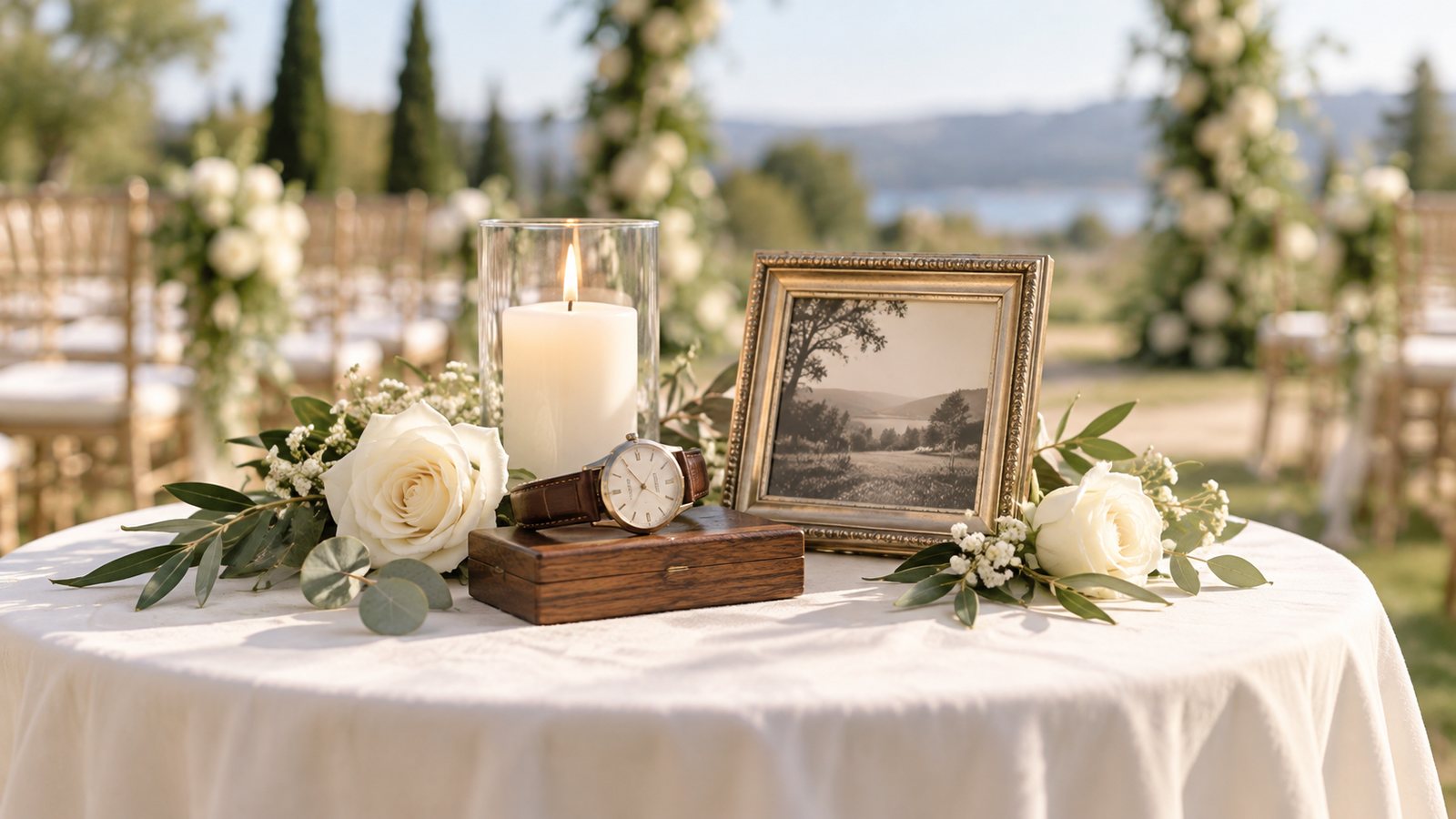
Partway through the ceremony, each of them carried something small to a table near the front: a keepsake that belonged to, or stood for, the person they had loved first. They set them down side by side.
Nobody in that room needed it explained.
They were saying that love doesn't end when a life does, and that the people they had lost would want them to go on loving.
If you are marrying after the death of a spouse, this is one way to make room for that in your ceremony.
How it can sound
Here is wording you can use as written or change to fit the two of you. Put in your own names where you see (Name).
The officiant
“Before (Name) and (Name) make their promises to each other, they want to honor two people who aren't here with us today, but who are part of why they are here. (Name) was married to (late spouse's name). (Name) was married to (late spouse's name). Both of those marriages ended not by choice, but by loss. Today (Name) and (Name) have each brought something to remember them by.”
The first partner, placing a keepsake
“(Late spouse's name), I brought this because it was yours. You taught me what it means to be loved well. I believe you'd want me to love again, and I believe you'd be glad it's (Name). Thank you for the years we had. I carry them with me.”
The second partner, placing a keepsake
“(Late spouse's name), this belonged to you, and so did a big part of my life. You'd be the first to tell me not to stand still. I'm not leaving you behind today. I'm bringing what you gave me into this new life.”
The officiant
“These keepsakes will stay here through the ceremony, a reminder that the love (Name) and (Name) knew before is not being replaced. It's the ground they stand on. Now, with the blessing of those who loved them first, they make their promises to each other.”
Choosing the keepsake
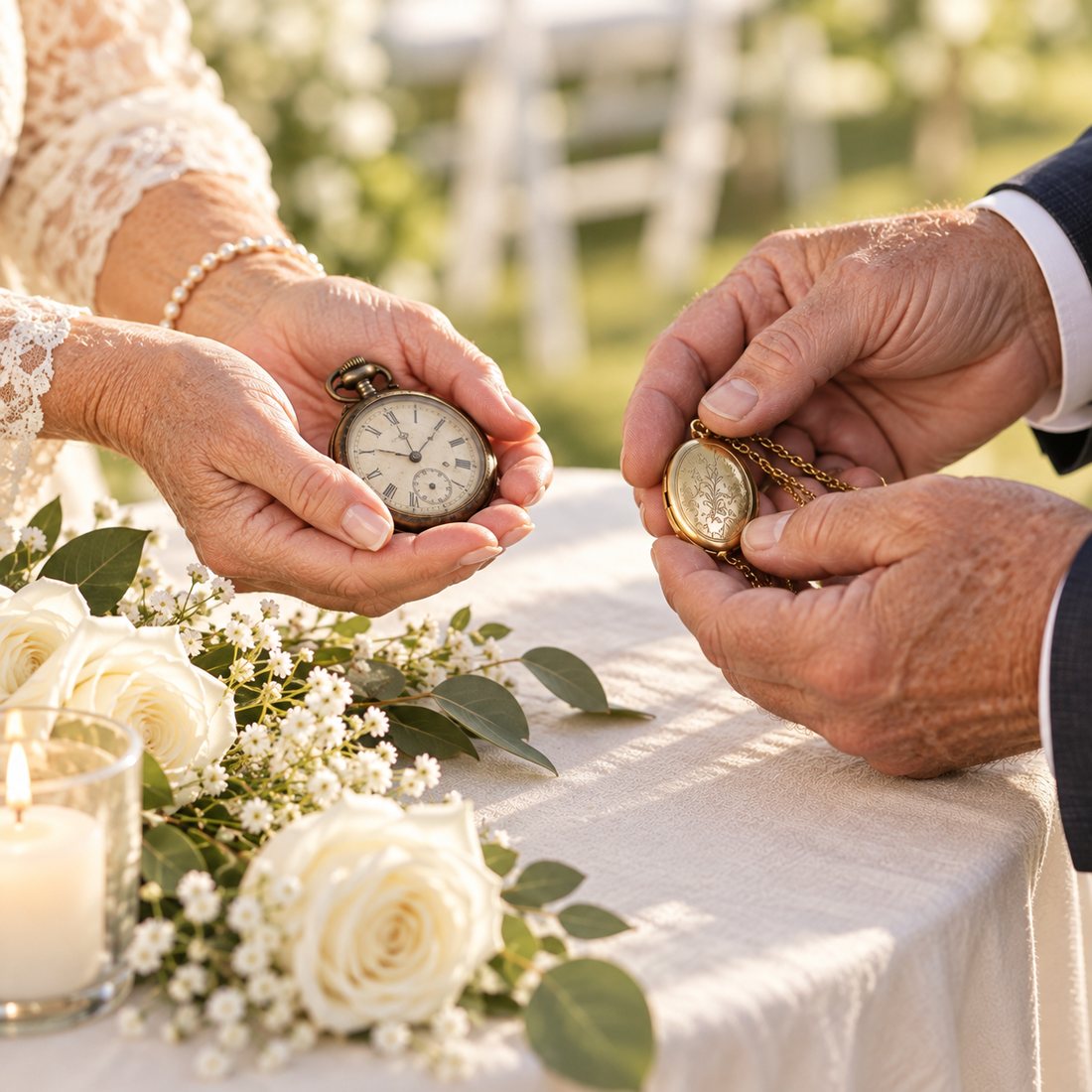
The keepsake can be anything that carries that person for you. Small is fine. Some ideas:
- A wedding ring or other piece of jewelry
- A watch, a pocket knife or a pair of reading glasses
- A framed photograph
- A handkerchief, a scarf or a favorite tie
- A well-worn book or a handwritten note
If you have children from your first marriage, ask them to help choose it, or let them carry it to the table with you. It tells them their mom or dad is still part of the family story.
Practical notes
- Placement: this works best just before the vows, so the moment leads into your promises rather than ending on sadness.
- Keep it short: the whole thing runs about two minutes.
- If you can't get the words out: the officiant can read them for you. That's perfectly all right. Nobody will think less of you for a tear.
- The table: a small round table with a white cloth, a candle and a few flowers is all you need. Set it to one side so it doesn't block the view of the two of you.
- If only one of you has lost a spouse: use one keepsake. Your partner can stand beside you, or place a flower next to it as a sign of welcome.
- Afterward: the keepsakes can move to a remembrance table at the reception, or simply go home with you.
Questions couples ask
Is it hurtful to my new partner to honor my late spouse?
Talk about it together first. I think it usually has the opposite effect. When both of you bring a keepsake, it says you understand each other's history and welcome all of it.
Will it make the ceremony too sad?
Not if it's short and placed before the vows. The words above end on blessing and hope, and the vows that follow carry everyone forward.
Can we honor other loved ones this way?
Yes. The same table can hold a keepsake for a parent, grandparent or anyone you wish were there. Change the officiant's words to name them.
Looking for more ways to bring your family and friends into the ceremony? Woven Together has 24 ideas, including a remembrance table, each with wording you can print. It comes as a paperback on Amazon or a printable PDF on Etsy. You'll find more on our wedding ceremony ideas and including your guests pages, or see the complete ceremony script guide.