Before the vows
The Declaration of Intent: "I Will"
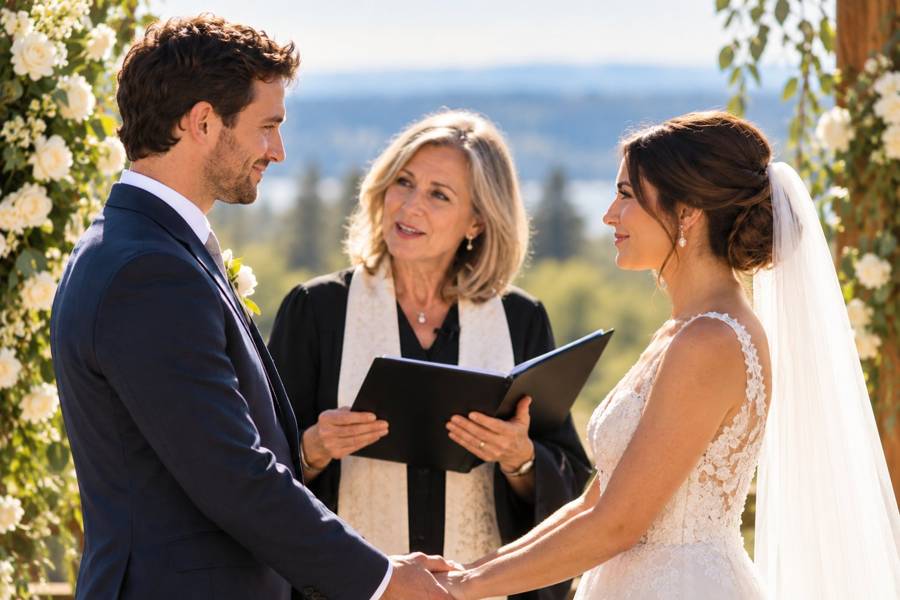
The Declaration of Intent, which I call The Intentions, is one of the most familiar parts of a wedding ceremony. It is the moment when each partner is asked, in one form or another, whether they intend to enter the marriage freely and take on the commitments marriage requires.
This is where you commonly hear the words “I will.” The “I do” part of the ceremony belongs to the vows, which follow The Intentions.
Couples sometimes confuse The Intentions with the wedding vows, but they serve different purposes. The Intentions come before the vows and prepare the way for them.
At the source of any meaningful action is intent. It answers an important question: What is it that you hope to achieve through this action, and what is your active role in bringing that to fruition?
In a wedding ceremony, The Intentions bring clarity. They give each person a chance to say clearly that they are choosing this marriage and accepting the responsibilities that come with it.
The Declaration of Intent is one part of the complete wedding ceremony script, leading naturally toward the vows and the exchange of rings.
The quick version
- The Intentions are where each partner says “I will,” choosing this marriage freely.
- The “I do” belongs to the vows, which follow The Intentions.
- Intentions are not vows. They prepare the way for the promises that come next.
- Talk together about what you intend your marriage to be, then share that with your officiant.
- Ask your officiant what wording, if any, is required where you marry.
At the source of any meaningful action is intent.
In this guide
- The Intentions are not the wedding vows
- Example 1: Traditional Declaration of Intent
- Example 2: A More Personal Declaration of Intent
- Example 3: Traditional Religious Declaration of Intent
- Example 4: Contemporary Declaration of Intent
- Should you say “I will” or “I do”?
- Is the Declaration of Intent required?
- What comes next?
The Intentions are not the wedding vows
The distinction is important.
The Intentions are a statement of what you intend: I will.
The vows are the promises you make to one another: I promise. I pledge. I give you my word. Vows are more than intentions. They are statements of commitment that are spiritually, legally, and personally binding.
I think of The Intentions as a prelude to the vows. At this point, the ceremony is building toward its emotional center. The Intentions prepare the couple, and everyone gathered with them, for the promises that follow.
Because these words are personal, don’t simply leave them to your officiant without thinking about them. Talk together about what you actually intend your marriage to be. Then talk with your officiant about wording that reflects those intentions.
The goal isn’t merely to repeat familiar wedding words. The words should express the marriage you intend to create together, and not a set of words that have little to do with how you view your role in marriage.
This is the foundation of your relationship. Express your love! Express your dreams!
This is the foundation of your relationship. Express your love! Express your dreams!
Example 1: Traditional Declaration of Intent
Officiant addressing (groom’s name):
Will you, (groom’s name), take (bride’s name), to be your lawfully wedded wife? Will you love her, comfort her, honor and protect her, and, forsaking all others, be faithful to her as long as you both shall live?
Groom: I will.
Officiant addressing (bride’s name):
Will you, (bride’s name), take (groom’s name), to be your lawfully wedded husband? Will you love him, comfort him, honor and protect him, and, forsaking all others, be faithful to him as long as you both shall live?
Bride: I will.
Example 2: A More Personal Declaration of Intent
Officiant addressing (groom’s name): (groom’s name), you have given every indication by your actions and by your presence here today that you will have (bride’s name) as your wife.
Will you continue to prove by your actions that you want to live together as husband and wife?
Will you respect (bride’s name), be gentle with her, love her, honor, and keep her?
Will you give yourself to her unselfishly, and be with her through sickness and health, through good times and bad, and be her constant companion, friend, and confidant?
Groom: I will.
Officiant addressing (bride’s name): (bride’s name), you have given every indication by your actions and by your presence here today that you will have (groom’s name) as your husband.
Will you continue to prove by your actions that you want to live together as wife and husband?
Will you respect (groom’s name), be gentle with him, love him, honor, and keep him?
Will you give yourself to him unselfishly, and be with him through sickness and health, through good times and bad, and be his constant companion, friend, and confidant?
Bride: I will.
Example 3: Traditional Religious Declaration of Intent
Officiant addressing (groom’s name):
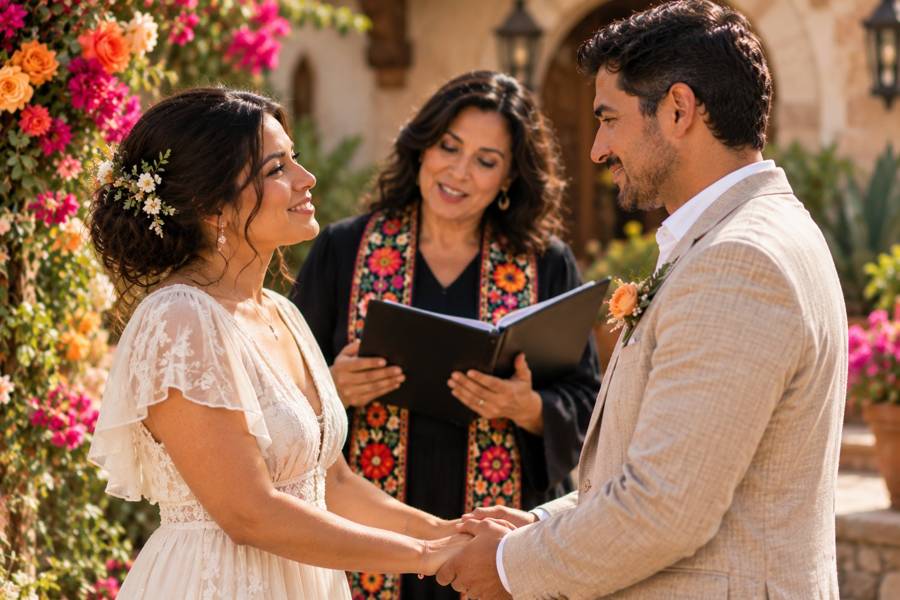
(groom’s name), will you have this woman to be your wife, to live together in a holy marriage? Will you love her, comfort her, honor and keep her, in sickness and in health, and forsaking all others, be faithful to her as long as you both shall live?
Groom: I will.
Officiant addressing (bride’s name):
(bride’s name), will you have this man to be your husband, to live together in a holy marriage? Will you love him, comfort him, honor and keep him, in sickness and in health, and forsaking all others, be faithful to him as long as you both shall live?
Bride: I will.
Example 4: Contemporary Declaration of Intent
Officiant addressing Partner 1:
(Name), do you freely choose (Name) to be your partner in marriage? Will you love and respect them, support and encourage them, share life’s joys and difficulties with them, and enter this marriage with faithfulness, honesty and care?
Partner 1: I will.
Officiant addressing Partner 2:
(Name), do you freely choose (Name) to be your partner in marriage? Will you love and respect them, support and encourage them, share life’s joys and difficulties with them, and enter this marriage with faithfulness, honesty and care?
Partner 2: I will.
Should you say “I will” or “I do”?
Many couples associate “I do” with this part of the ceremony, but “I will” is commonly used in the Declaration of Intent.
The difference is subtle but meaningful. When your officiant asks whether you will enter the marriage and fulfill particular responsibilities, “I will” is the natural response.
Your vows are different. They are the promises you make directly to one another.
Don’t become overly concerned about the exact phrase, however. Wedding traditions vary, and your officiant may use wording appropriate to your ceremony, faith tradition and local requirements. What matters most is that you understand what you are affirming.
What matters most is that you understand what you are affirming.
Is the Declaration of Intent required?
Whether a particular Declaration of Intent is legally required depends on where you are married and who is officiating the ceremony. Religious traditions may also have their own requirements.
Don’t assume that a beautiful set of personal vows automatically includes everything your ceremony needs. Ask your officiant what wording, if any, is required where your marriage will take place. Once those requirements are understood, you can decide how much additional wording you want to include.
What comes next?
Once each partner has stated their intention to marry, the ceremony moves toward its most important promises, the exchange of vows.
Continue to Wedding Vows: Meaning, Examples & Wording →