
Where to look, what to ask
How to Find a Wedding Officiant
Most couples know they need an officiant. Fewer know where to find one. Having stood at the front of many weddings, I can tell you the officiant shapes the ceremony more than almost anyone else, so this is worth a little time.
Here is where to look, what to ask before you book, and what a good officiant should be glad to tell you.

The quick version
- Decide first what kind of ceremony you want: faith-based, civil, or personal. That tells you what kind of officiant to look for.
- Start with people you trust: recent couples, family, your venue and your other vendors.
- Then widen the search: wedding directories, local wedding groups online, a plain web search, or your county clerk's office.
- Meet before you book. Ask about the legal side, the wording, the fee and what happens if they get sick.
- Book six months to a year ahead. Good officiants fill their calendars early.
In this guide
Know what kind of officiant you're looking for
Before you search, decide what kind of ceremony you want. The answer narrows the search a great deal, because each kind of officiant brings something different...
Tap to read
In this guide
Before you search, decide what kind of ceremony you want. The answer narrows the search a great deal, because each kind of officiant brings something different.
| Kind of officiant | Best for |
|---|---|
| Clergy from your church, synagogue, mosque or faith community | Faith-based ceremonies, often in your place of worship |
| Professional officiant or celebrant who leads weddings as their work | Couples who want a polished, personal ceremony without a religious setting, or a blend |
| Civil officiant such as a judge, magistrate or courthouse official | Small, simple, legal ceremonies |
| A friend or family member who gets authorized | Couples who want someone who knows their story to lead it |
If faith matters to one or both of you, talk with your faith leader first. Some will only marry couples who meet certain requirements, and some won't lead a ceremony outside their place of worship. I cover this more on my wedding officiant page.
Know the kind of ceremony you want, and you'll know the kind of person to look for.
Where to find a wedding officiant
The best leads usually come from people who have already seen an officiant at work. Start close to home, then widen the search...
Tap to read
The best leads usually come from people who have already seen an officiant at work. Start close to home, then widen the search.

Ask people who've been to a good wedding lately
Friends or family who married recently, or guests who still talk about a ceremony, are your best source. Ask what they liked about the officiant, not just their name.
Ask your venue and other vendors
Venue coordinators, photographers and planners work with officiants every weekend. They know who shows up on time, speaks well and works smoothly with everyone else.
Look at wedding directories
Sites like WeddingWire and The Knot list officiants by area, with reviews from past couples. Read the reviews closely. Look for comments about how personal the ceremony felt, not just how nice the officiant was.
Try local wedding groups online
Many towns have Facebook groups with names like "(Your City) Brides" or "(Your City) Weddings." Post your date, your location and the kind of ceremony you want, and you'll often hear from couples and officiants alike.
Do a plain web search
Search "wedding officiant" plus your town or county. Many independent officiants have their own websites, with sample ceremonies, prices and videos.
Call your county clerk's office
If you want a simple civil ceremony, the county clerk or courthouse can tell you who performs them locally. Some offices also keep a list of officiants.
Ask your faith community
If you belong to a church or other faith community, start there. If you don't, a local faith leader may still be willing to meet with you, or can point you to someone who will.
Found someone you like? See the questions to ask before you book.
Questions to ask before you book
Treat your first meeting as an interview, for both of you. A good officiant will be glad you asked, and you'll learn a lot from how they answer...
Tap to read
Treat your first meeting as an interview, for both of you. A good officiant will be glad you asked, and you'll learn a lot from how they answer.

The legal side
- Are you legally authorized to marry us in the county where our wedding will be?
- Do you need to register there, and have you done it?
- Will you sign and return the marriage license, and by when?
The ceremony
- Can we choose or write our own wording? Is there anything you must include, or won't say?
- Can we see a sample ceremony you've written, or a video of you leading one?
- How many times will we meet before the wedding?
- Will you come to the rehearsal?
The practical side
- Is our date open? How long will you hold it?
- What is your fee, and what does it include?
- Is there a deposit? What if we have to change the date or cancel?
- What happens if you're sick or can't make it? Do you have a backup?
- What do you usually wear? (Ask if it matters to you.)
Pay attention to how they listen. The right officiant will ask about the two of you, not only about the logistics. If they talk more than they listen, keep looking.
The right officiant asks about the two of you, not only about the date.
What the fee should cover
Fees vary a great deal by area, experience and how much the officiant does for you. What matters more than the number is what it includes...
Tap to read
Fees vary a great deal by area, experience and how much the officiant does for you. What matters more than the number is what it includes. Ask for it in writing, and check for each of these:
- How many meetings or calls before the wedding
- Writing a personal ceremony, or using a standard one
- Attending the rehearsal
- Travel to your venue, and any extra for distance
- Signing and returning the marriage license
- Any extra charge for a weekend, holiday or evening wedding
For clergy at your own place of worship, there may be no set fee. A gift or donation to the church is customary. Ask the church office what's usual, so no one is embarrassed.
If a friend or family member officiates, there's no fee, but it's kind to cover their costs and give them a thank-you gift.
A few warning signs
Most officiants are good, caring people. Still, a few things should make you pause before you sign anything...
Tap to read
Most officiants are good, caring people. Still, a few things should make you pause before you sign anything.
- They can't tell you plainly whether they're legally authorized where you're marrying.
- They won't put the fee and what it includes in writing.
- They have one ceremony and won't change it.
- They're slow to reply now, before you've paid them anything.
- They have no answer for what happens if they're sick.
- They make the meeting about themselves.
Being asked isn't the same as being allowed. I learned that at my very first wedding. Read my story: Are you sure you're allowed to marry them?
If you'd rather ask a friend
Many couples now ask a friend or family member to officiate. It can be one of the most personal choices you make. It also puts real responsibility on that person...
Tap to read
Many couples now ask a friend or family member to officiate. It can be one of the most personal choices you make. It also puts real responsibility on that person, so choose someone who is comfortable speaking in front of people and will take the preparation seriously.
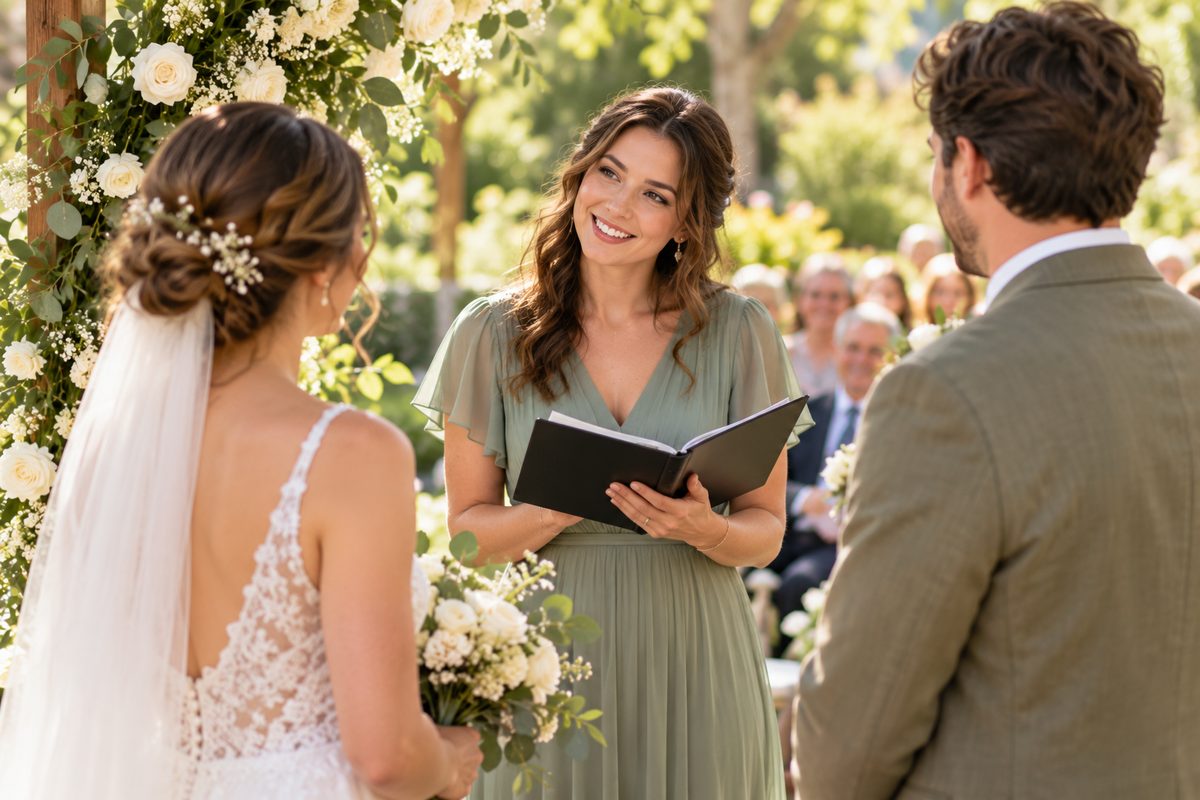
Ask early, and give them an easy way to say no. Then help them with the legal side. Your county clerk can tell them what they need to do to be authorized, and how long it takes.
If your friend says yes, send them my tips for the chosen one, and the pages on the rehearsal and the marriage license.
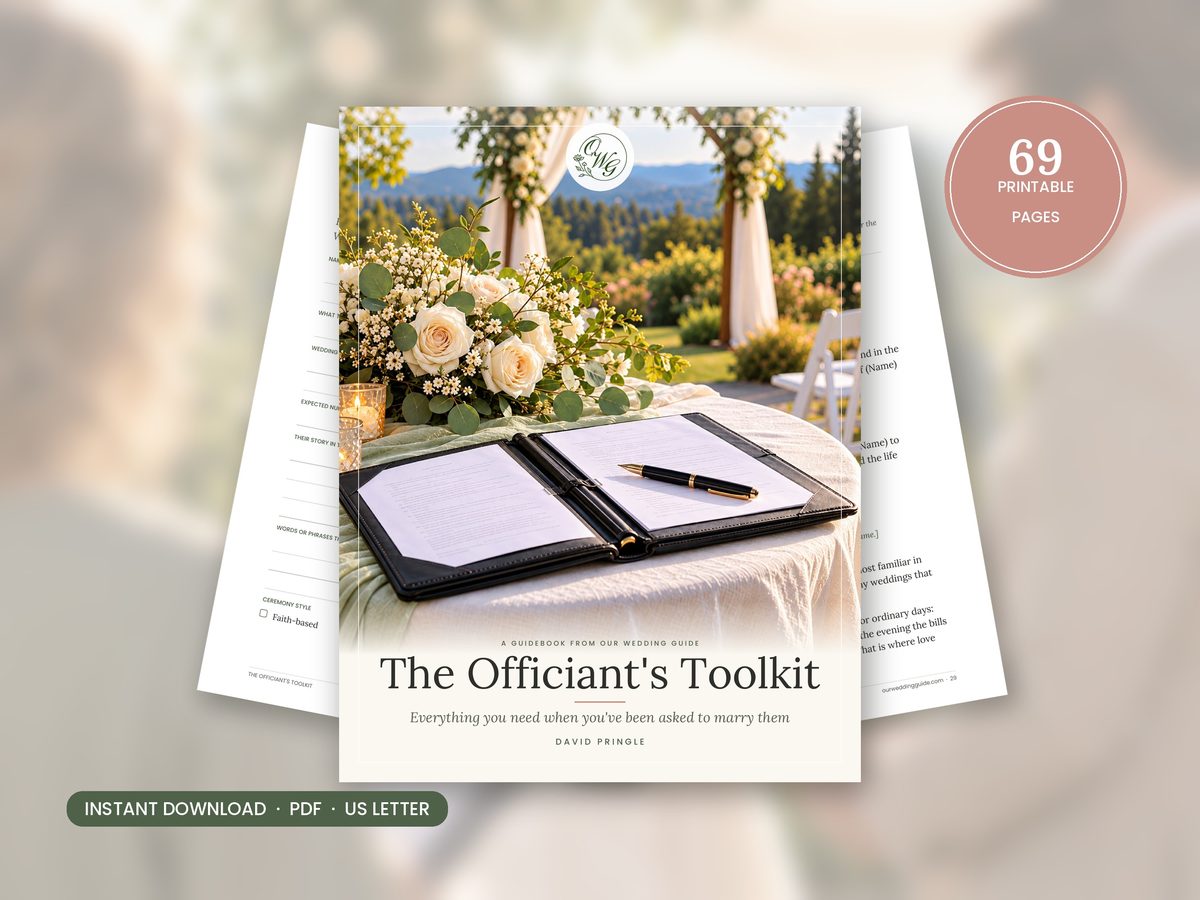
A gift for the friend who said yes
The Officiant's Toolkit
Most friends say yes and then quietly wonder what they've gotten into. My printable toolkit answers their questions before they have to ask, with a plan that starts six months out, three complete scripts and a day-of checklist. 69 pages.
See what's inside Get it on EtsyAffiliate link: we may earn a small commission at no extra cost to you.
Common questions
How early to book, whether you have to meet in person, and what to do if your officiant lives out of state...
Tap to read
How early should we book an officiant?
Six months ahead at the least, and about a year if you can. Popular officiants and popular dates go early, and you don't want to settle for your second choice.
Do we have to meet in person?
Not always. A video call works well for a first meeting, especially if the officiant lives far away. Do try to meet at least once before the wedding, or at the rehearsal at the latest.
Can an officiant from another state marry us?
Sometimes. Some states and counties require officiants from elsewhere to register first. Ask the county clerk where you're marrying, well before the wedding.
What if our officiant cancels at the last minute?
Ask about this before you book. Many professional officiants have a backup they trust. If yours doesn't, keep the name of a second officiant handy, just in case.
Should the officiant come to the rehearsal?
Yes, if at all possible. The officiant is often the one who runs it, and it's the best chance for everyone to learn where to stand and what comes next.